
The Timber, the Iron, and the Taxonomist
I did not arrive at this record from outside it. The timber history was already underfoot before I understood its full connection to my own family line. Fred LeBoeuf, my great-grandfather, likely worked inside the same lumber-company world whose traces I am now trying to read.
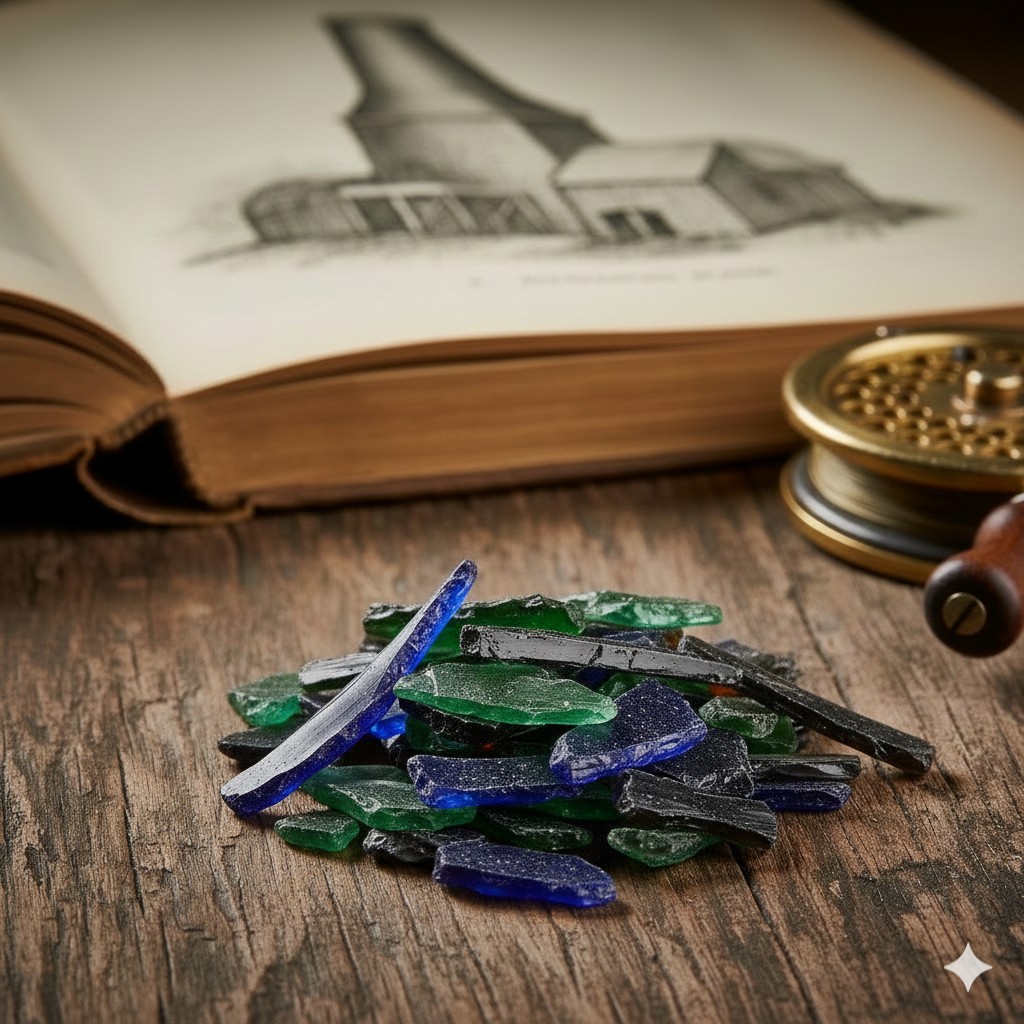
Years earlier, as a child, I began finding the remains without understanding the full account: iron in the ground, slag-like glass, old cuts, strange fragments, and places that felt used up and still alive. The field was teaching before I knew I was being trained.

The Timber Inheritance
Fred LeBoeuf belongs in this record because the timber history did not stay abstract. I did not understand the connection when I first came back to this ground. Only later, after moving here and beginning Field Scrawl, did I realize that Fred had likely worked inside the same lumber-company world whose traces I was now trying to read.
That discovery changed the account. I was not only standing on land marked by timber history. I was standing on ground my great-grandfather may have crossed as part of that older economy: wood, ice, grade, horses, sleds, rope, weather, hunger, wages, and the hard mechanics of moving weight through northern winter.
The irony is not clean. I came to the Ledger as an observer, taxonomist, and recorder of disturbance. Then the record turned and showed me a family name inside the very history I was auditing. The debt is not simple. That is why it remains a Ledger.
The Iron Record
The iron record is less forgiving. Furnace floors, slag, rusted fragments, vitrified material, and industrial residue are not stories softened by age. They are receipts.
As a child, finding such material felt like discovery. Later, the same fragments became evidence. What first looked like treasure became a different kind of witness: proof that the ground had been worked, burned, cut, heated, altered, and left to carry the remainder.
The field does that over time. It revises your childhood finds. It lets wonder remain, but adds responsibility underneath it.
The Taxonomist Returns
My professional life trained me to read water through small organisms. The benthic tray taught me how to separate witness from background: what is present, what is absent, what is tolerant, what is sensitive, and what the substrate is trying to hide.
Coming back to the timber and iron record with that training changed the ground. Slash became data. Furnace waste became substrate. Old roads became flow paths. Drowned wood became habitat. A family connection became part of a material account.
The taxonomist did not replace the child who found things in the dirt. He gave that child a method.

Material Condition
- Family timber connection: Present
- Fred LeBoeuf / lumber-company connection: Discovered after return
- Childhood discovery layer: Present
- Iron and furnace residue: Present
- Taxonomic method: Returned to the field
- Contradiction: Unresolved
The Ledger Problem
This is the problem the page has to hold: I am indebted to the same history I am auditing. The old timber economy damaged the land, but it also shaped the people who shaped me. The iron record scarred the ground, but it also taught me how long material consequence can last.
The Ledger does not solve that contradiction. It keeps it visible.
The Place is not a museum and not a confession booth. It is a working record. Timber, iron, family, taxonomy, childhood discovery, and present repair all enter the same account.
The ground was already speaking before I knew how to listen.