The Spring Push
The forecast called for 72 and partly cloudy, and for once the day actually matched the paper. Maybe it never truly hit seventy-two, but it didn't matter. Before leaf-out, a clear seventy-degree day can feel like standing under a heat lamp while you work. The shifting clouds kept the edge off the spring sun. Cool one minute, warm the next. Perfect weather for moving.
By the end of the day, I'd planted fifty Norway spruce (Picea abies) along the landing and mid-slope.
The place was becoming crowded with seedlings: eastern hemlock, white pine, Norway spruce, white spruce, balsam fir, and even a few pitch pine left over from another decision and gambled into the line.
I don't know if all of them truly belong together. That's for another decade to decide. If things hold, the slope should tighten into an evergreen wall instead of the beech suckers that want to reclaim everything.
Planting here is never graceful work. The glacial till doesn't surrender a hole without an argument. More than once, the shovel opens a spot for a seedling and uncovers another buried stone the size of a pumpkin. After a while, you laugh because frustration burns too much energy.
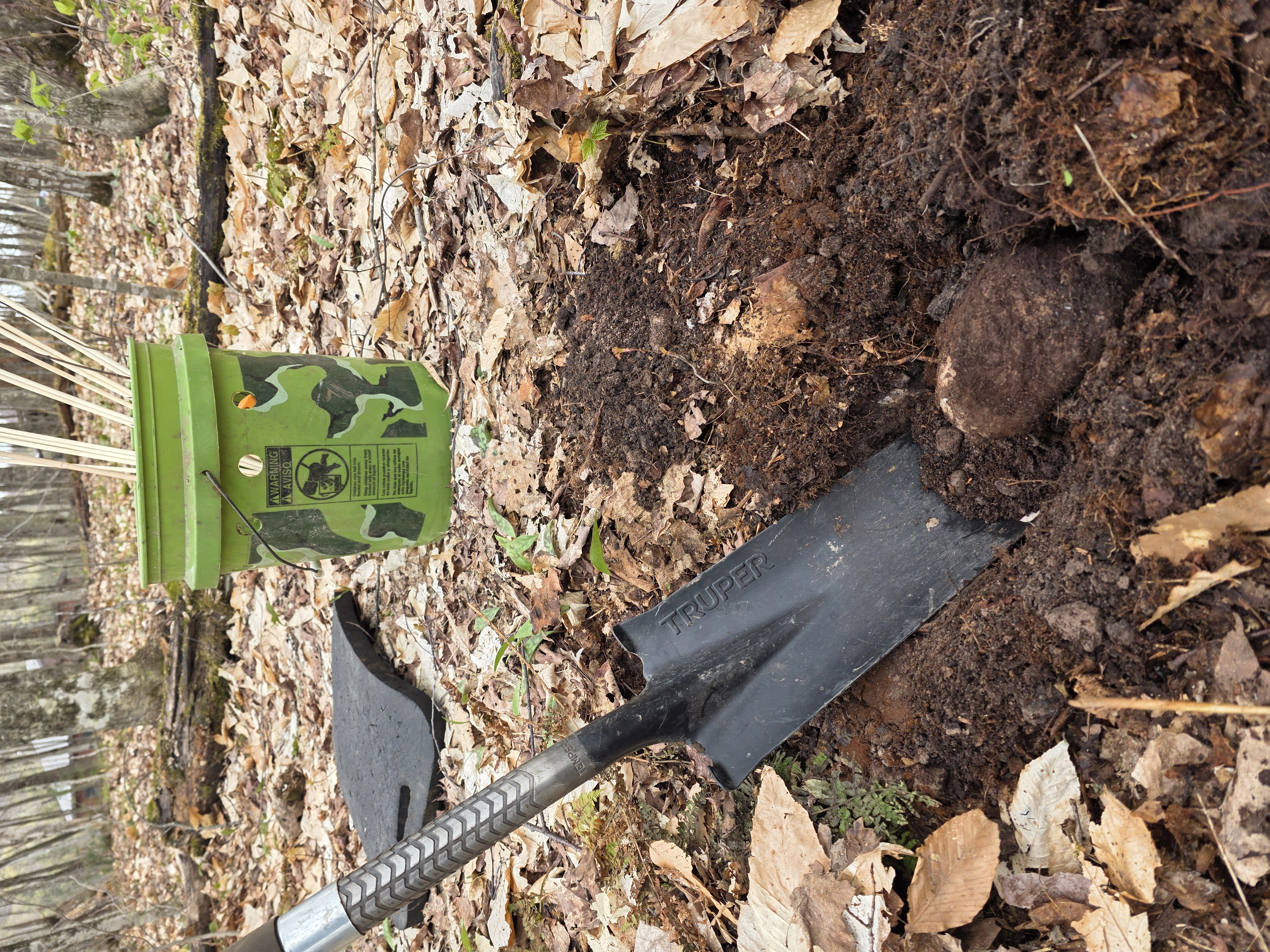
Most of the earlier planting had been done together, Chris and I working through the slopes over previous seasons. She wasn't at the place this week, so I was doing this round alone.
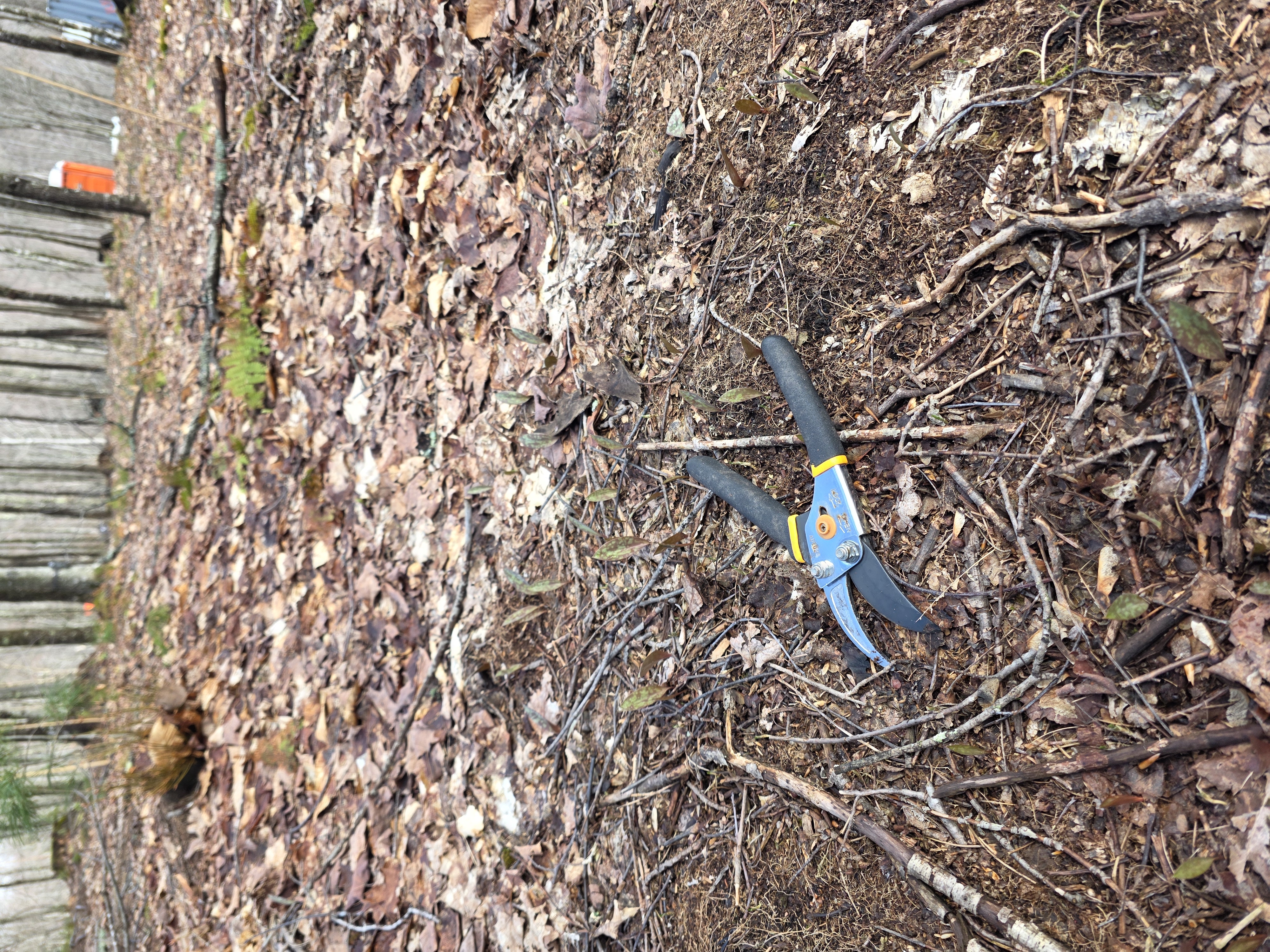
While walking to another planting location, I came across Chris's hand pruners lying on the ground. She'd put them down while working the previous year and forgotten them. Grass and ferns had hidden them through the growing season. Now, before the spring vegetation had filled in, they were plainly visible, with tiger lilies beginning to emerge around them.
I sealed the woodshed floor I'd built the year before, using the same treatment I'd used on the barn. The grain darkened as the finish soaked in.
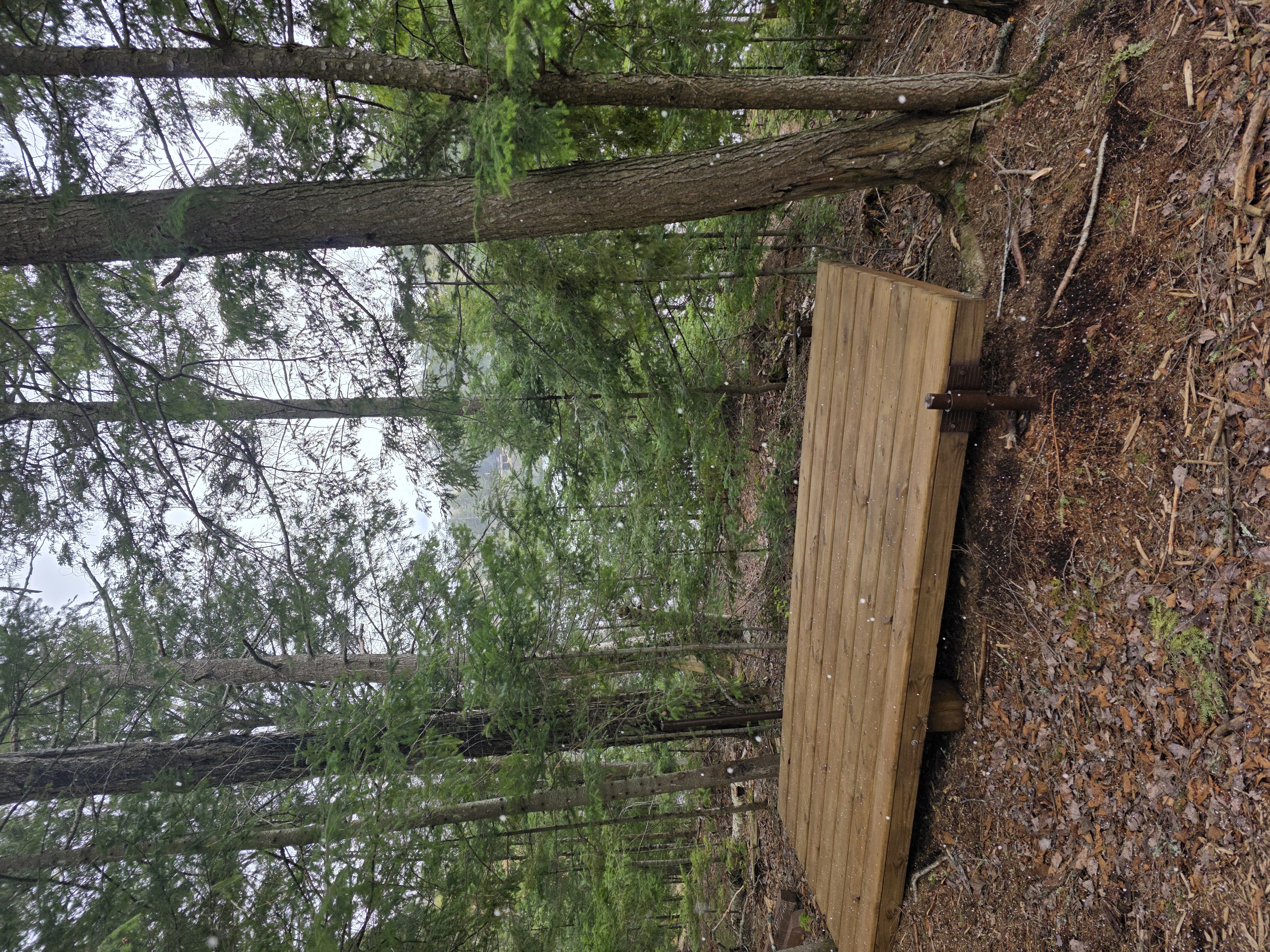
The dock went back together that day too. Usually that takes two people. In previous years, my son had taken one side while I lifted the other so we could align the bolt holes between the sections. He wasn't up here this time, so I improvised.
I dragged over a cut section of hemlock trunk, something already headed for the splitter, and rolled it into the water beside the frame. I lifted one side of the dock and rested it on the log to hold the height while I moved around to the opposite side.
Just enough elevation. Just enough time. The bolt slipped through clean.
I watered the twenty balsam fir planted the previous week, along with the blueberries up on the hill and the new spruce within reach of the hose. I'd need a few more lengths to reach the rest of the slope before the ground dried hard.
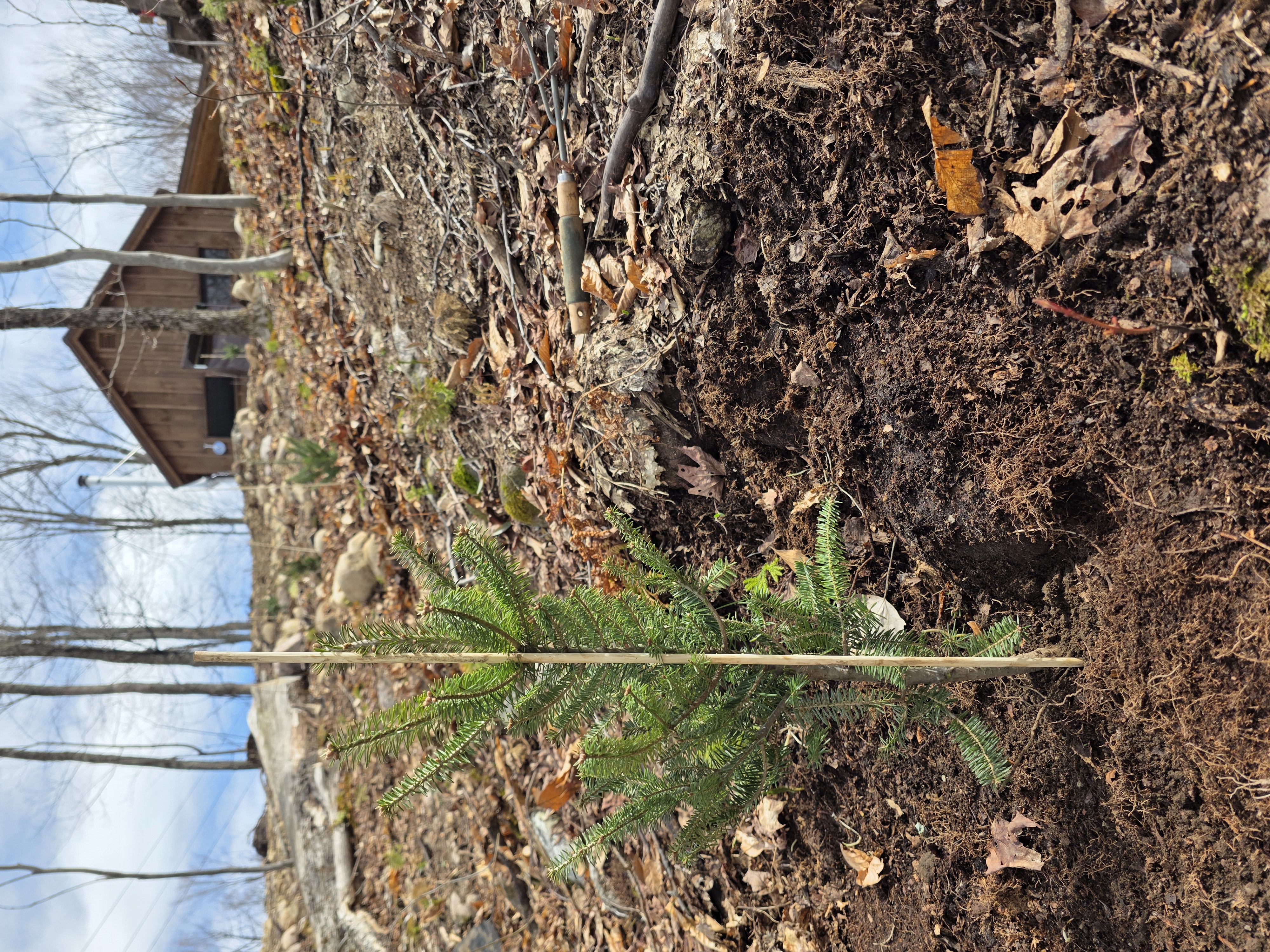
The tomatoes and basil were repotted and tucked away. It was the first time I'd tried growing them seriously, and they actually looked healthy.
Now I'm sitting behind the barn, watching the last of the light drain out of the west. The canopy still hasn't leafed out, but the buds are swollen enough that the whole woods carries a red haze against the sky.
The sunset moved from orange into blue, with thin clouds stretched across it. The temperature has probably dropped into the forties by now. Cool enough for the Filson Mackinaw hoodie.
There's one bright object sitting above the western horizon. Too steady for a star. Probably Venus.
The air smells cold again.
I just wish you were here, Chris.
SOUTH SHORE EMERGENCE
DATE: LOCATION: THE PLACE / SOUTH SHORE
Cold rain passed through, followed by clearing and another hard temperature drop. Morning rose slowly into the upper forties under broken cloud. The stove stayed lit.
The forest floor answered anyway.
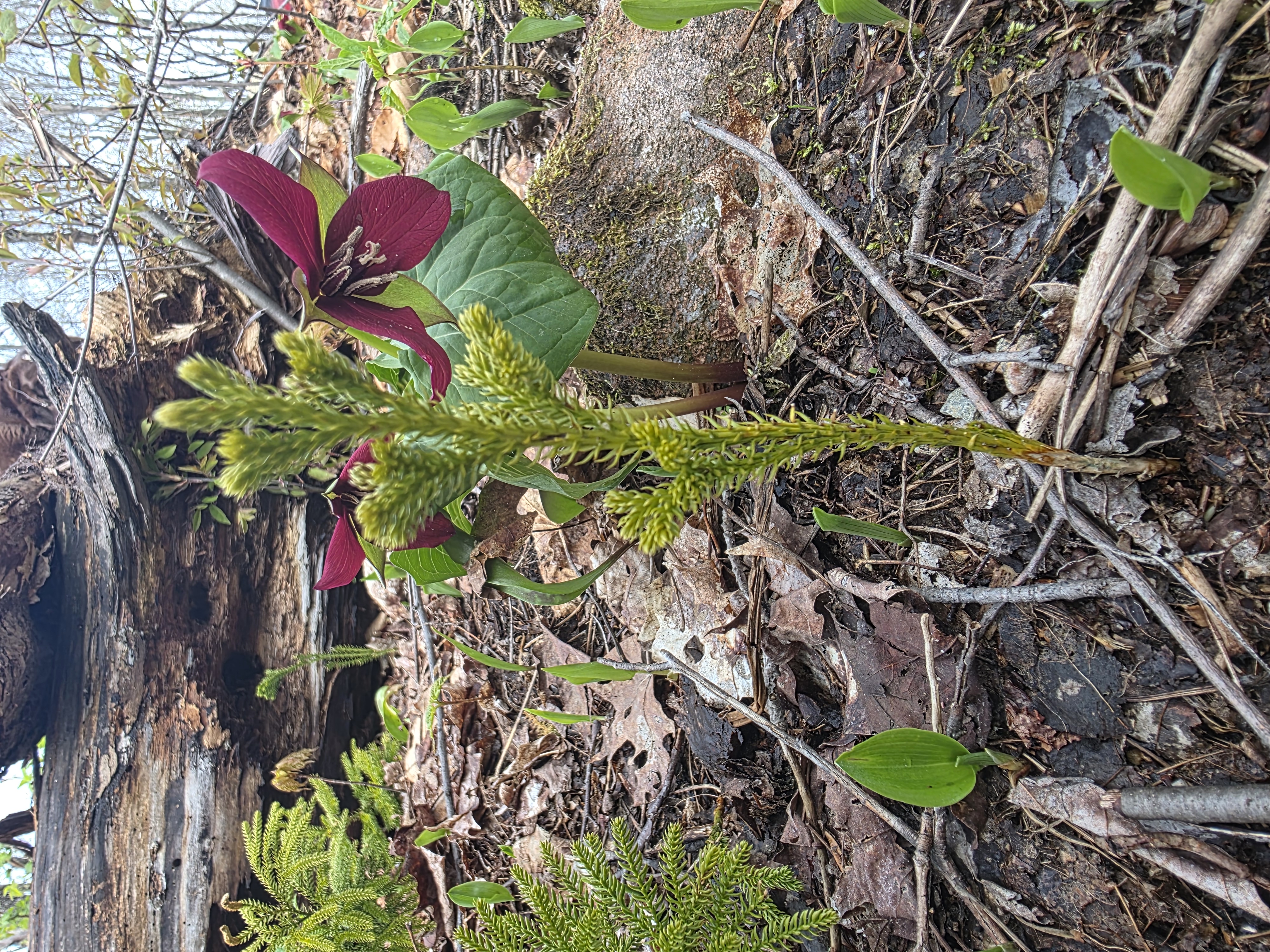
A red trillium opened beside a decaying log, burgundy against wet leaf litter. Nearby, a bright green clubmoss held its place in the same saturated edge. A narrow leaf emerging close by appeared consistent with Canada mayflower, another small sign of the woodland floor pushing upward in pieces.
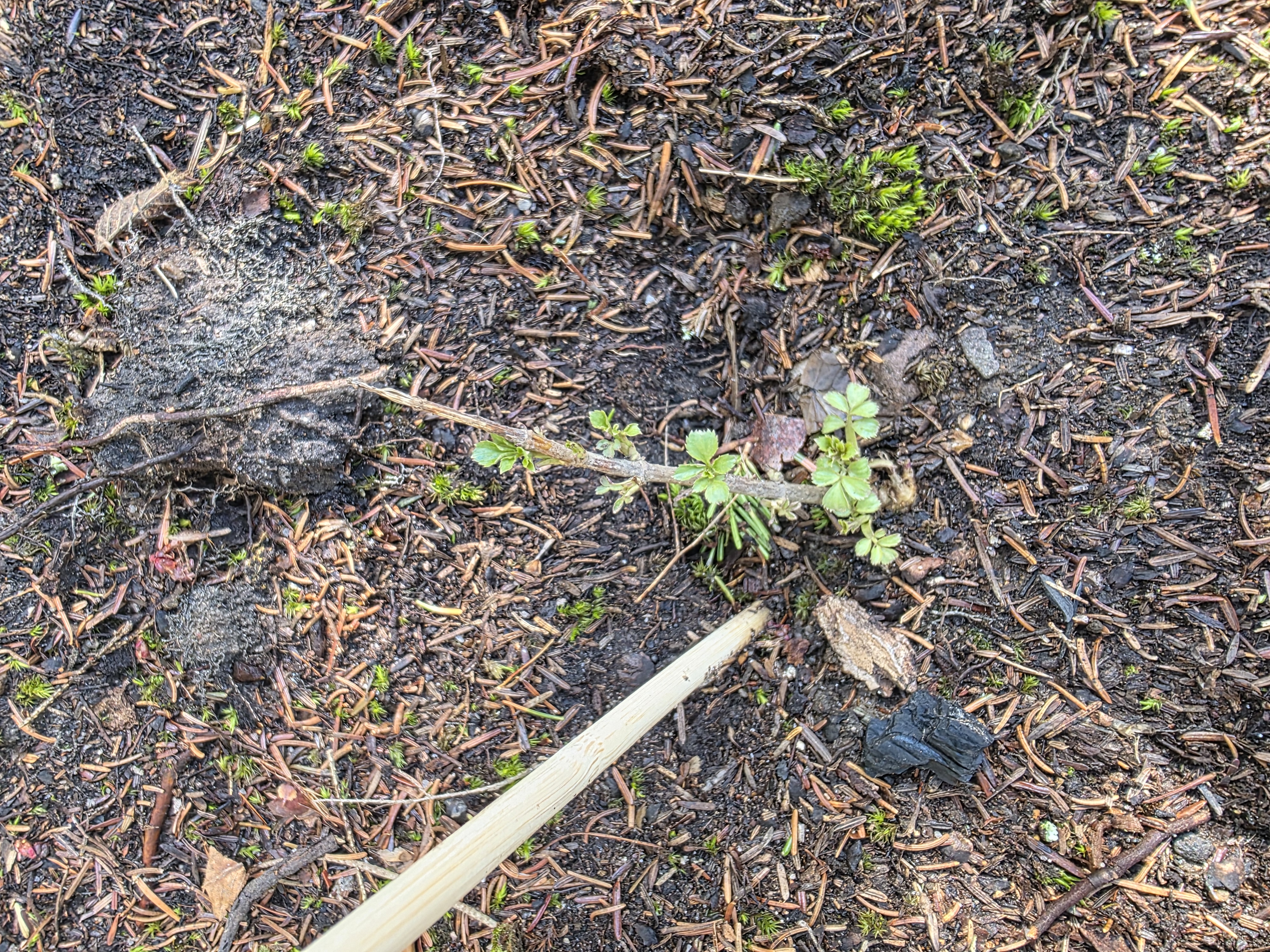
Along the south shore, planted American elderberry cuttings were beginning to break dormancy. Roughly twenty had been set into ground receiving an estimated four to six hours of current seasonal light. Leaf break does not prove establishment, but it is the first good answer from the plant.
The ground is waking unevenly.
Moss first. Ephemerals in fragments. Planted shrubs testing the cold soil.
FIELD RECORD: South shore spring emergence and planted elderberry response.
EVIDENCE: Red trillium flowering; clubmoss active; probable Canada mayflower; American elderberry leaf break.
CERTAINTY: Mixed; see species records.
WOODS STROLL AFTER PLANTING
DATE: LOCATION: THE PLACE
Early May still felt colder than late April.
The morning warmed enough to work, so a baker’s dozen of bare-root flowering dogwoods went into the ground: ten in the future maple grove and three behind the future garage site, where they may have more wind protection.
Later, I walked the woods to check earlier plantings: osier dogwood, river birch, Norway spruce, last year’s hemlocks, rhododendrons, azaleas, and blueberries.
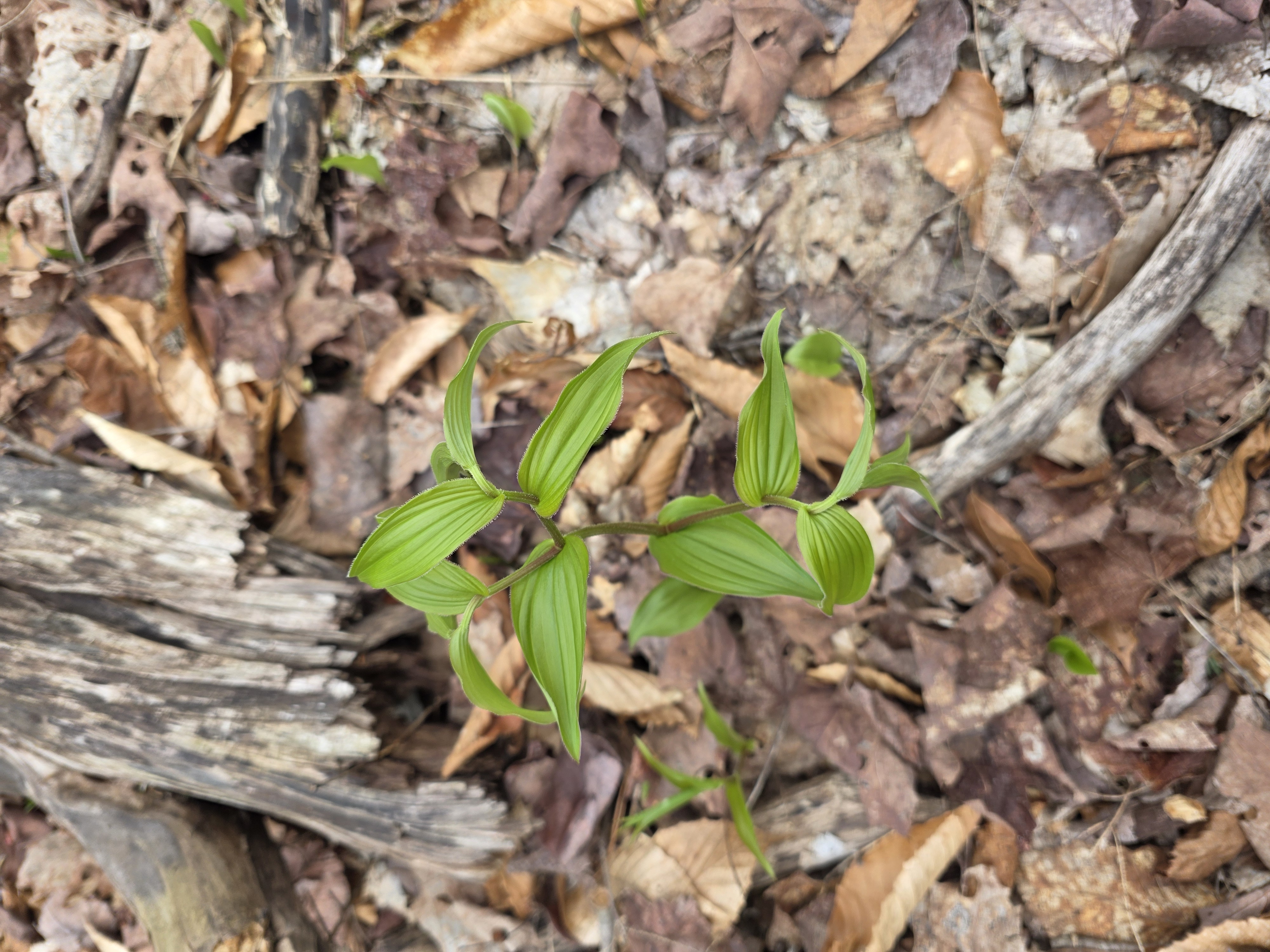
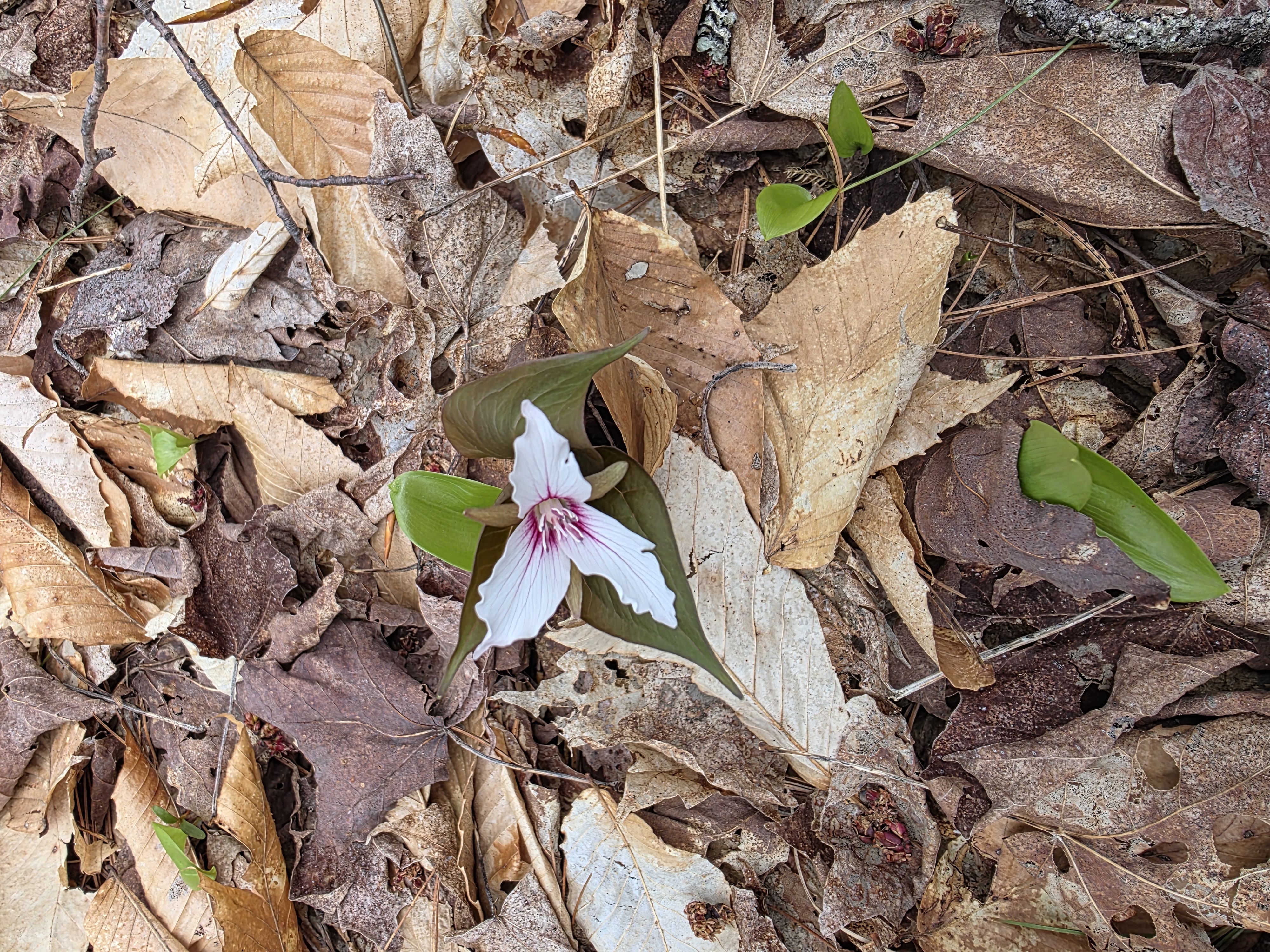
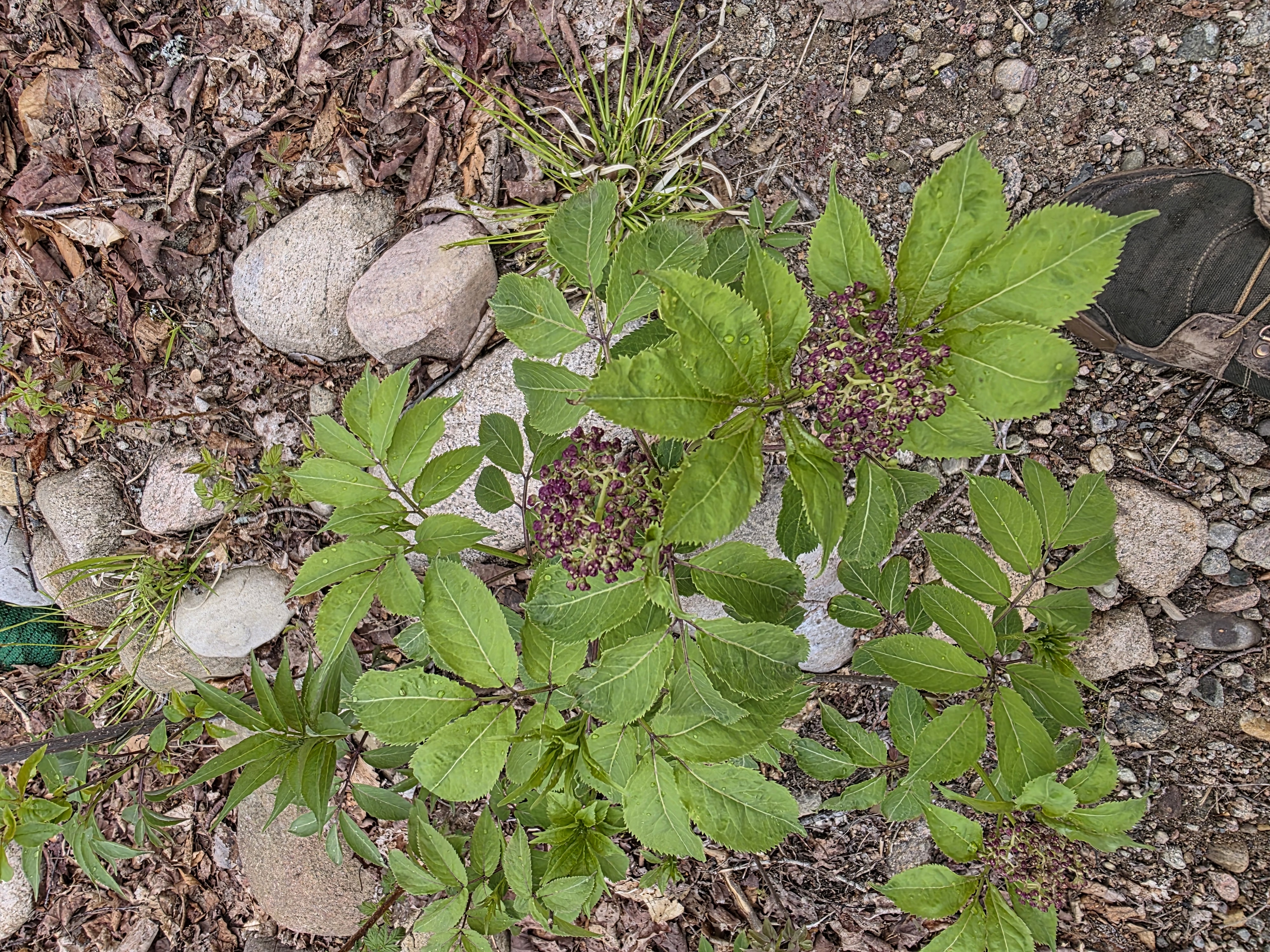
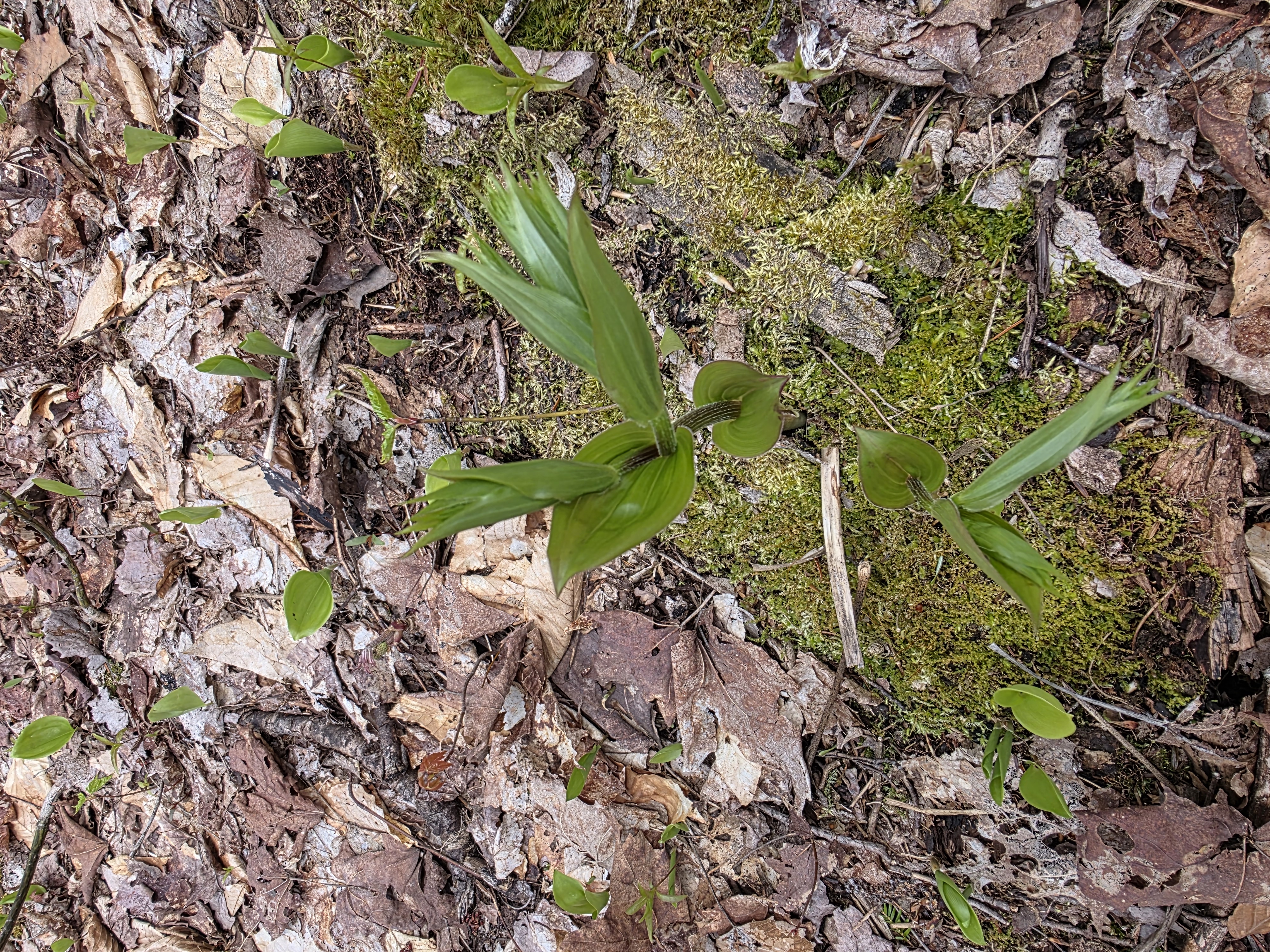
The walk added several woodland records. Sessile-leaved bellwort was up before full canopy closure. Painted trillium showed in the acidic understory. Red elderberry buds were forming along the edge. False hellebore rose from saturated ground.
A possible eagle call carried overhead before the clouds tightened and a brief spell of sleet moved through.
The day held both work and witness: plants put in by hand, and plants already answering from the woods.
FIELD RECORD: Flowering dogwood planted; multiple woodland understory species recorded.
EVIDENCE: Planting work and visual species observations during woods stroll.
CERTAINTY: Mixed; see species records.