
The Last Sentinel
For years, I looked at this watershed through the lens of a taxonomist, trying to balance a ledger that was not mine to settle. I used words like debt and audit to make sense of the scars left by lumber companies, past owners, and the easy habit of taking more from the land than the land could quietly absorb.
But standing here with a chainsaw, feeling steel meet the resistance of wood, the professional distance dissolves. The academic shield gets flayed away by the grit of the work. The Ledger is not a spreadsheet anymore. It is a scrawl: the raw record of what remains.
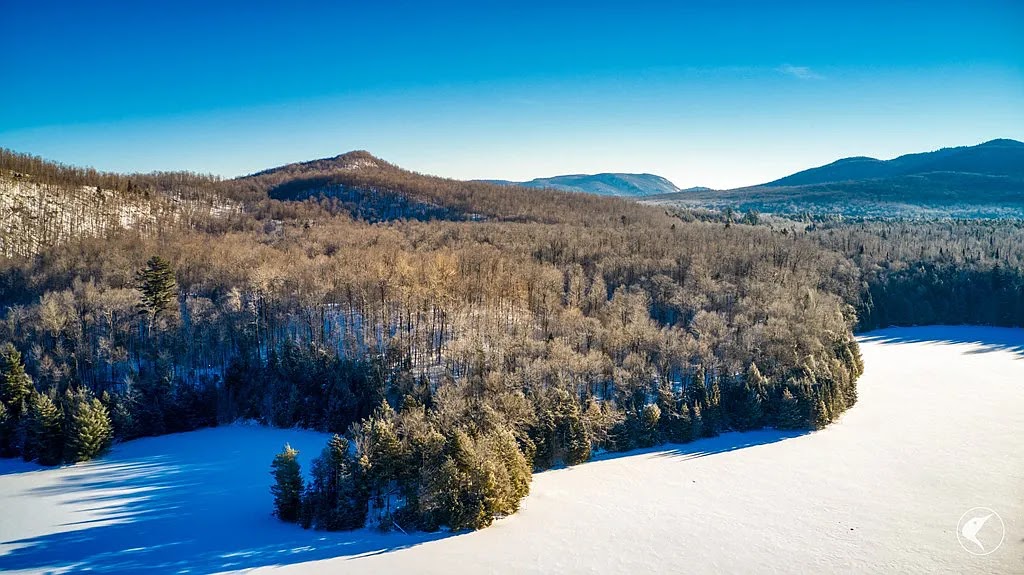
The Approach
The peninsula on the eastern shore is a high-exposure zone: the stern of The Place, where prevailing winds have a direct line of sight. To reach it, we follow a path cut through the wreckage of earlier decisions.
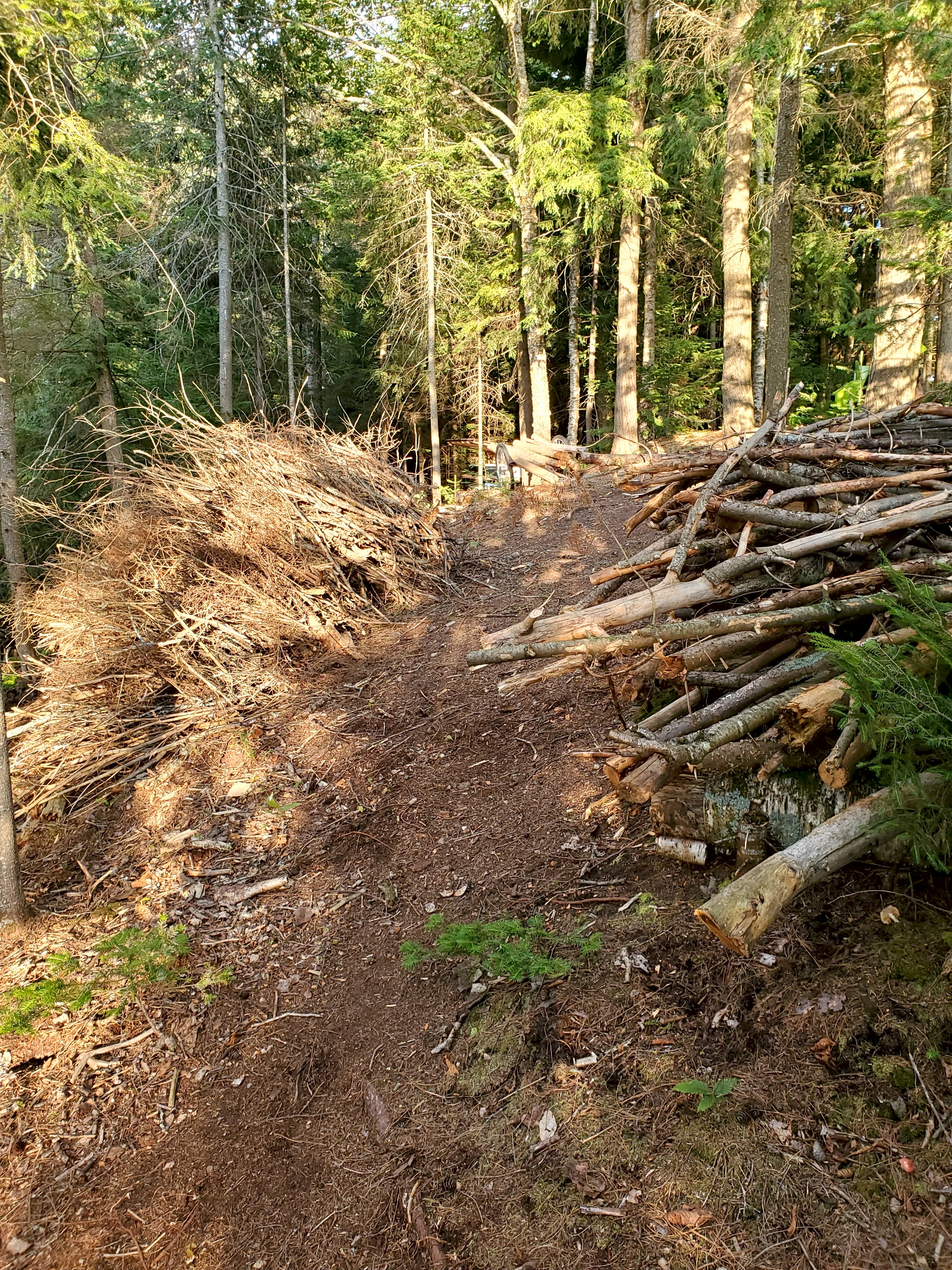
Slash remains from previous extraction. The trail is passable, but it is not clean. Every step crosses the leftover arithmetic of access, clearing, view, slope, and neglect.
The Sentinel
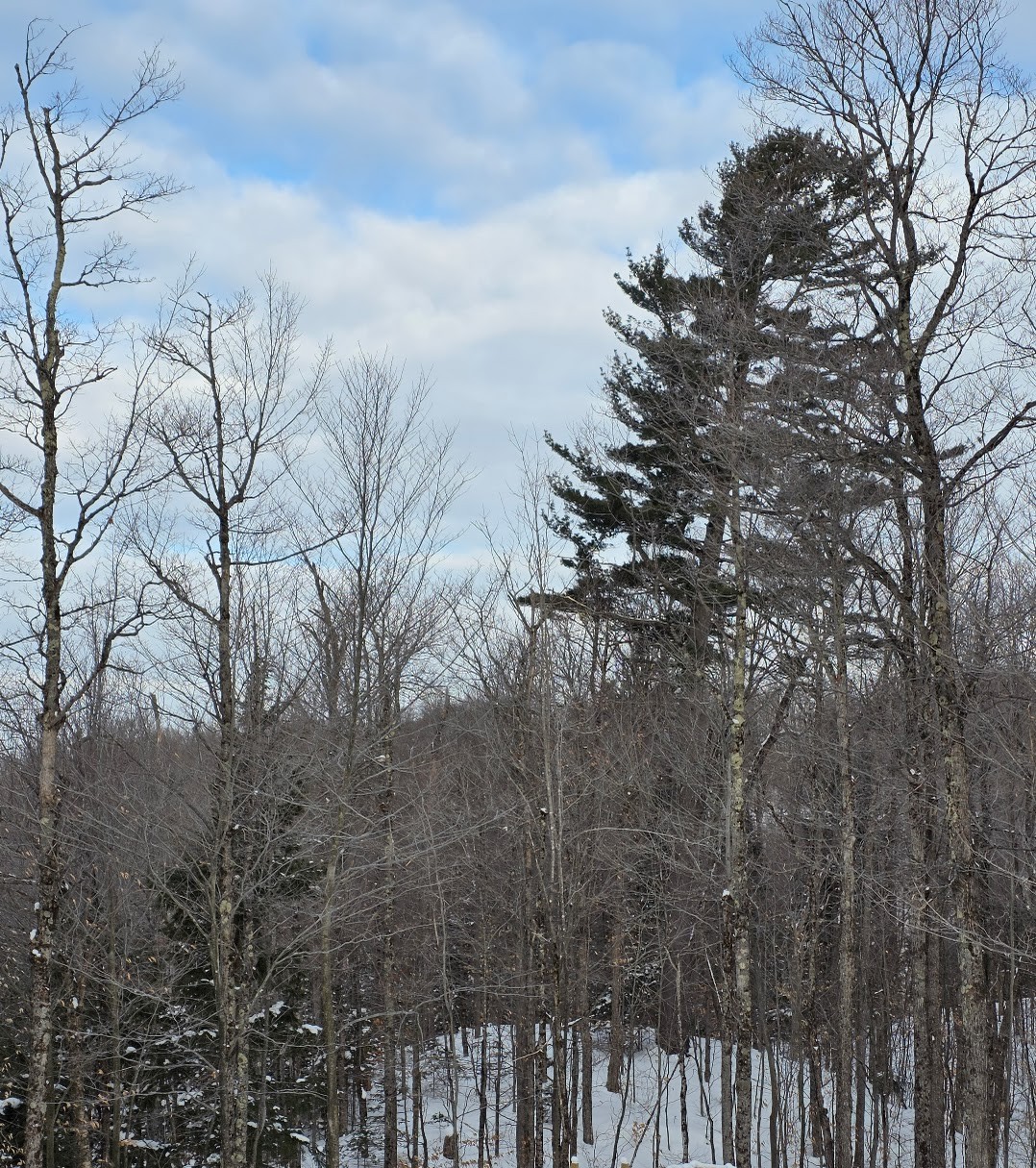
Most of the maples here are modern, weak-stemmed things, young enough to belong to the after-story. But one white pine stands apart. By the look of it, the tree is well over a century old. It was here before the present shoreline settled into its current shape and long before we entered the record.
It is no longer vertical. The winds have compromised the foundation. The lean is a raw physical fact, an angle showing that the center of gravity has shifted beyond recovery.
There is a primal urge to shore it up: bring in pulleys, cables, braces, and force the frame back toward vertical. But the leverage of the wind is absolute. The tree has already entered a different stage of the account.
The Parallel Frame
I no longer feel the need to intervene. The pine will eventually go over. The disruption is scheduled by wind, weight, root hold, wet ground, and time.
That fact arrived while my own frame was also being assessed. The tree had no chance to reset its bearing. I did. The difference is not superiority. It is timing, medicine, and luck.
The old pine became a standing comparison: one frame exposed beyond correction, another frame preparing to be shored up so the work could continue.
The Work Beneath It
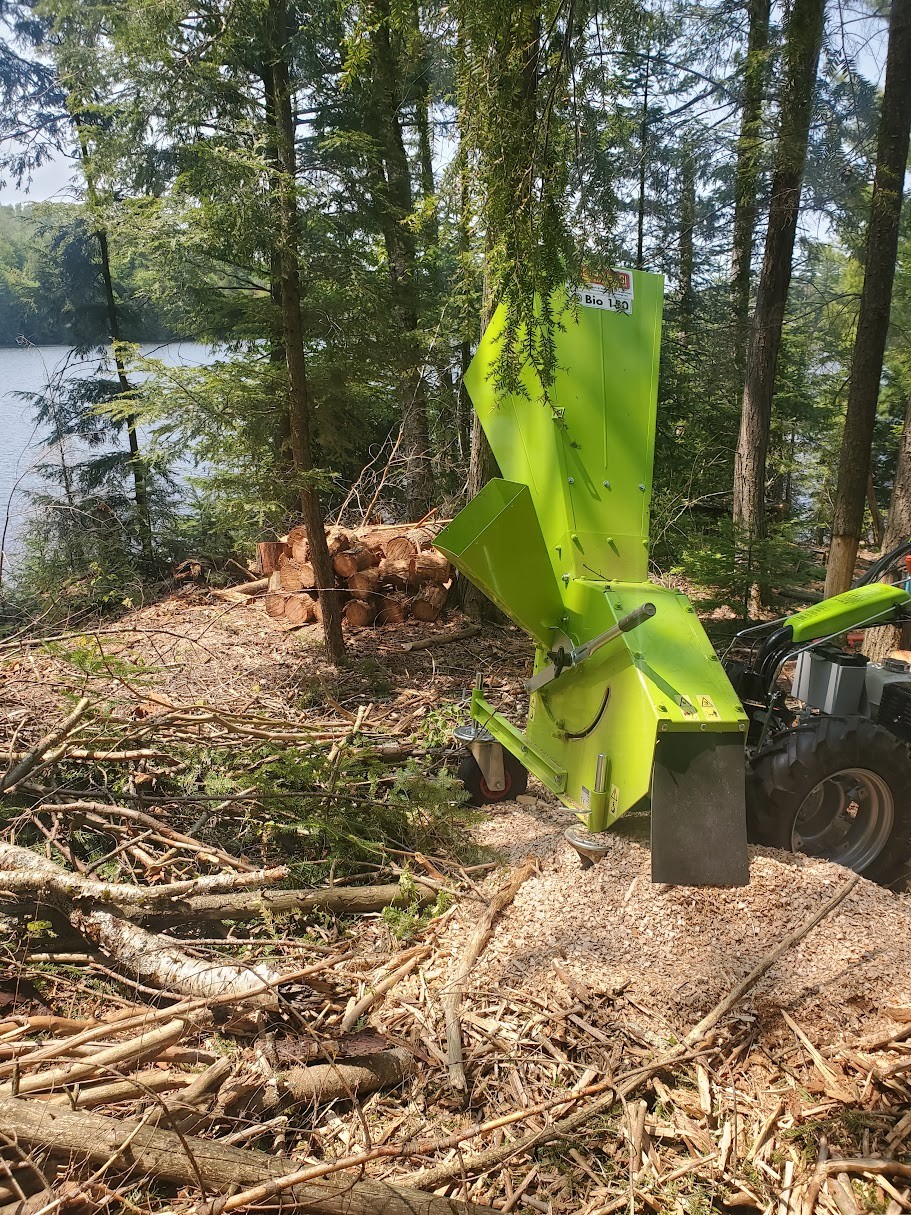
I spent afternoons beneath the tree with a chainsaw and splitting axe, processing downed hemlock and birch. I enjoy the labor. It works on my health and my frame, returning a different kind of heat than the woodpile offers.
The work is not separate from the witness. Each round cut, split, moved, and stacked becomes part of the same account: deadfall into heat, slash into order, exposure into evidence, body into instrument.
Witness Condition
- Old white pine: Present
- Critical lean: Present
- High-exposure wind line: Present
- Residual slash: Present
- Downed hemlock and birch: Processed
- Seedling response: Observed
- Intervention threshold: Declined
I am just someone watching seedlings push through the debris, and the pine is the last sentinel of an older woods, forced into decline by the absence of its peers.
The winds take it hard. Every gust makes the missing forest visible. Survival here has been bought with absence. We are both still here, weathered and scarred, but neither of us is untouched by what has been taken.
We are standing on the same ground for a little while longer.
THE SENTINEL BEGINS TO MOVE
DATE: LOCATION: THE PLACE / WINDOW STATION
The Sentinel is no longer only a landmark.
From the window station, the white pine shows an apparent east-southeast lean of 5.2 degrees. Ground inspection confirms what the angle suggested: the root plate is beginning to lever the western side of the soil upward.
The bond between root and till has started to fail.
Mud season matters here. Saturated glacial till loses friction. Wind, weight, thaw, and gravity begin to share the same work. The tree is still standing, but the ground around it has entered the record.
FIELD RECORD: White pine root-plate displacement observed.
EVIDENCE: Apparent 5.2° lean; western tension-side soil heave.
CERTAINTY: Observed from fixed window station and ground inspection.
NOTE: This is a baseline record for future movement.
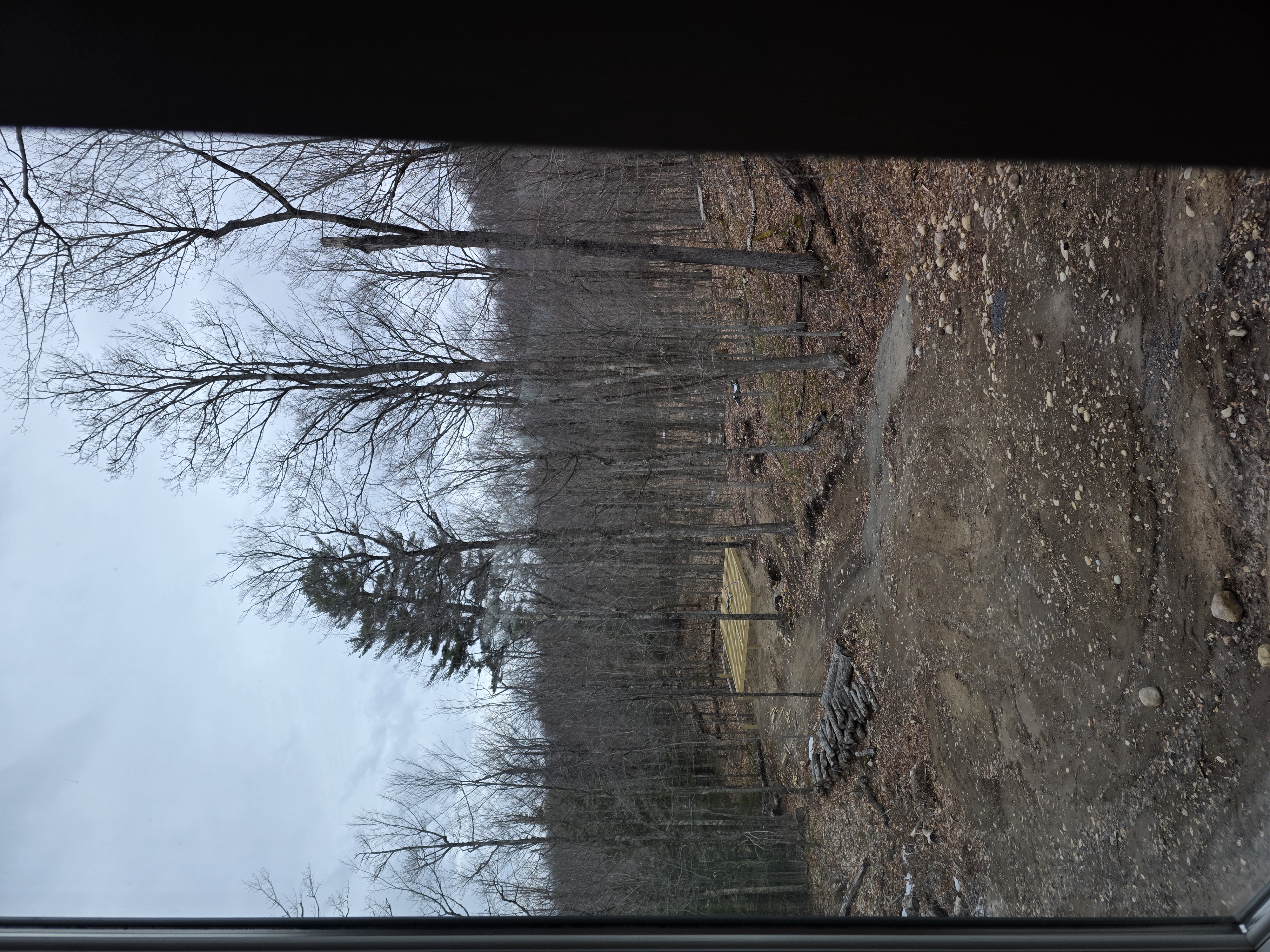
The Sentinel Takes the Wind
The posts and railing stay fixed in the frame while the pine and the green regrowth below it move under the gusts. Earlier in the day, the wind had come with rain from the south. By evening, the northwest had begun to press in, and the tree was taking that change through its whole height.
The thought is not that the old forest would have stopped this wind. The larger weather would still have crossed the land. But a full-height forest would have broken up more of that force before it reached the slope. The present surface is different: opened, regrown, uneven, with one tall white pine standing above much of the younger cover.
The Sentinel is reading both things at once — the weather crossing the Place, and the changed surface the weather now has to cross.