
Maple Prototype: The 9-Gallon Aggregate
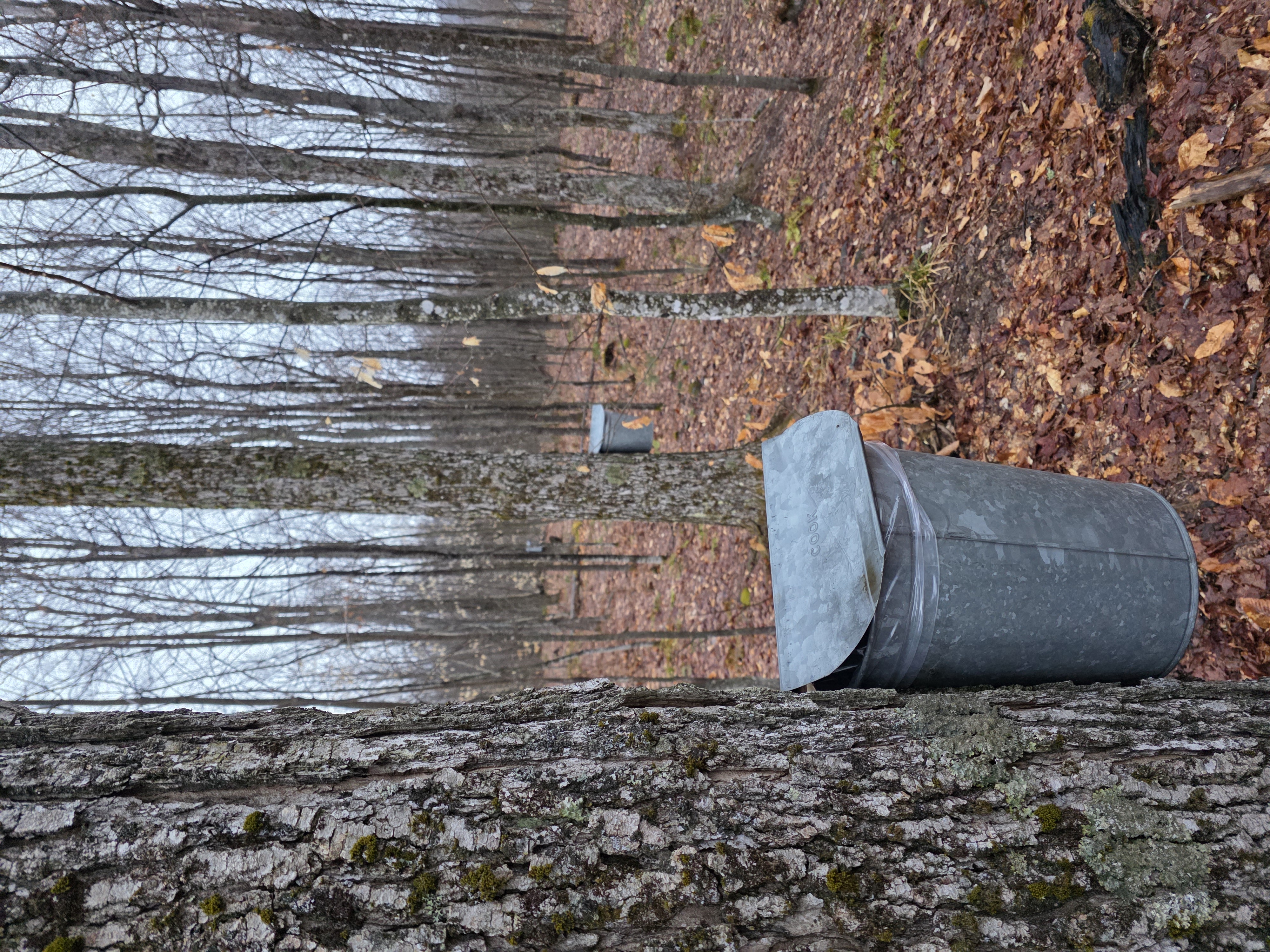
The 2026 maple run was a prototype, not a full sugar operation. Nine gallons of Acer saccharum sap were collected to test the thermal engines, fuel logic, storage method, finishing instruments, and human judgment before any larger expansion.
The target was syrup. The result was Sandy Maple: a solid-state sugar asset created by overshoot, miscalculation, and inadequate instrumentation. The failure was not wasted. It became the calibration.
The 40:1 Physics
Maple work begins with imbalance. The rough ratio for sugar maple is often treated as forty units of sap to one unit of syrup. To reach density, water must be driven off until the sugar concentration approaches finished syrup.
The nine-gallon aggregate required the removal of nearly all its volume. The objective was roughly one quart of finished syrup. The actual run proved that volume math and finishing control are not the same thing.
The Hardwood Engine
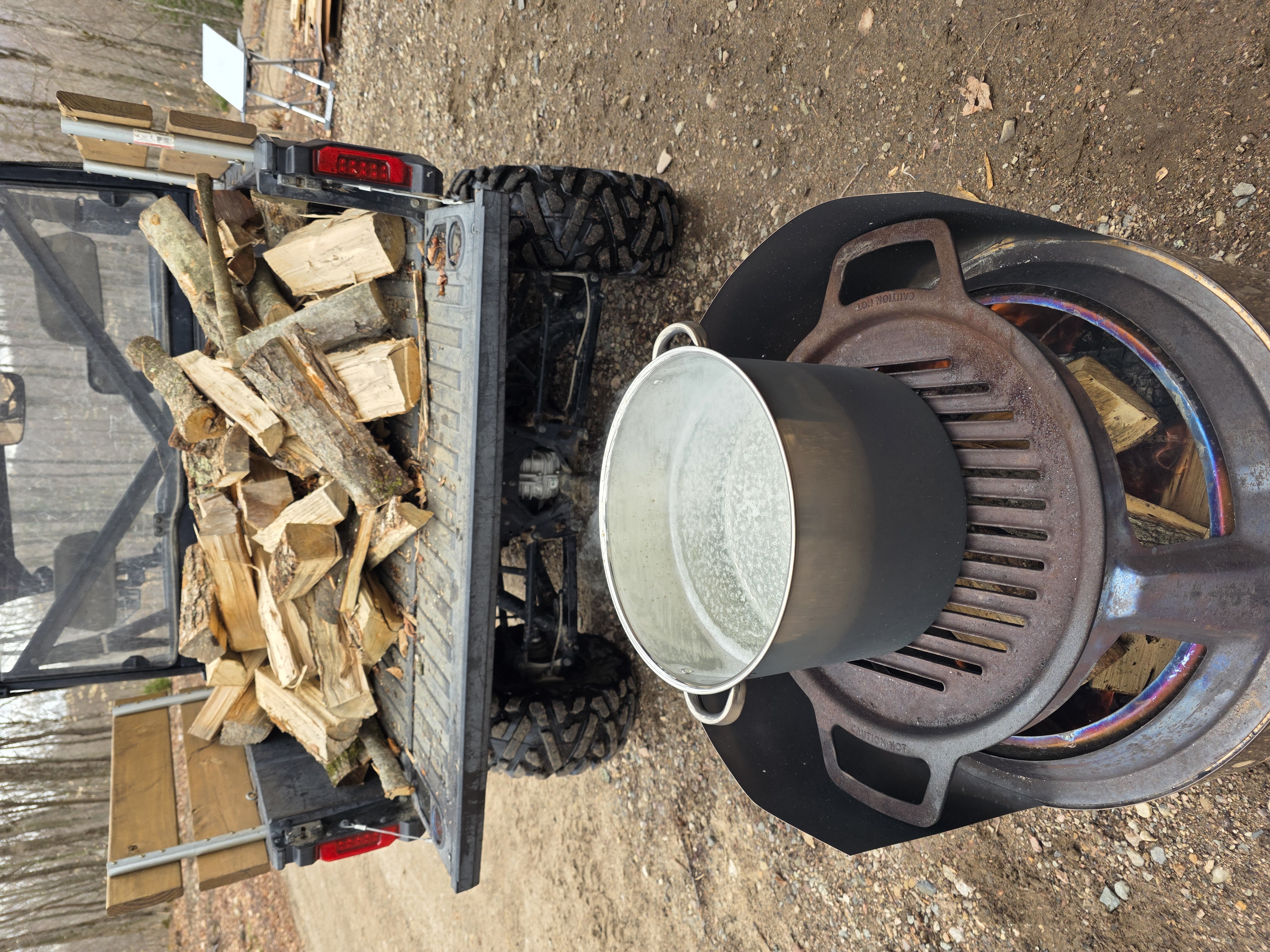
The bulk phase used hardwood fuel: maple and beech, with minor birch mixed into the inventory. The Solo Stove became the first thermal engine. Its task was not precision. Its task was evacuation: move water out of the aggregate as efficiently as possible before the finishing phase.
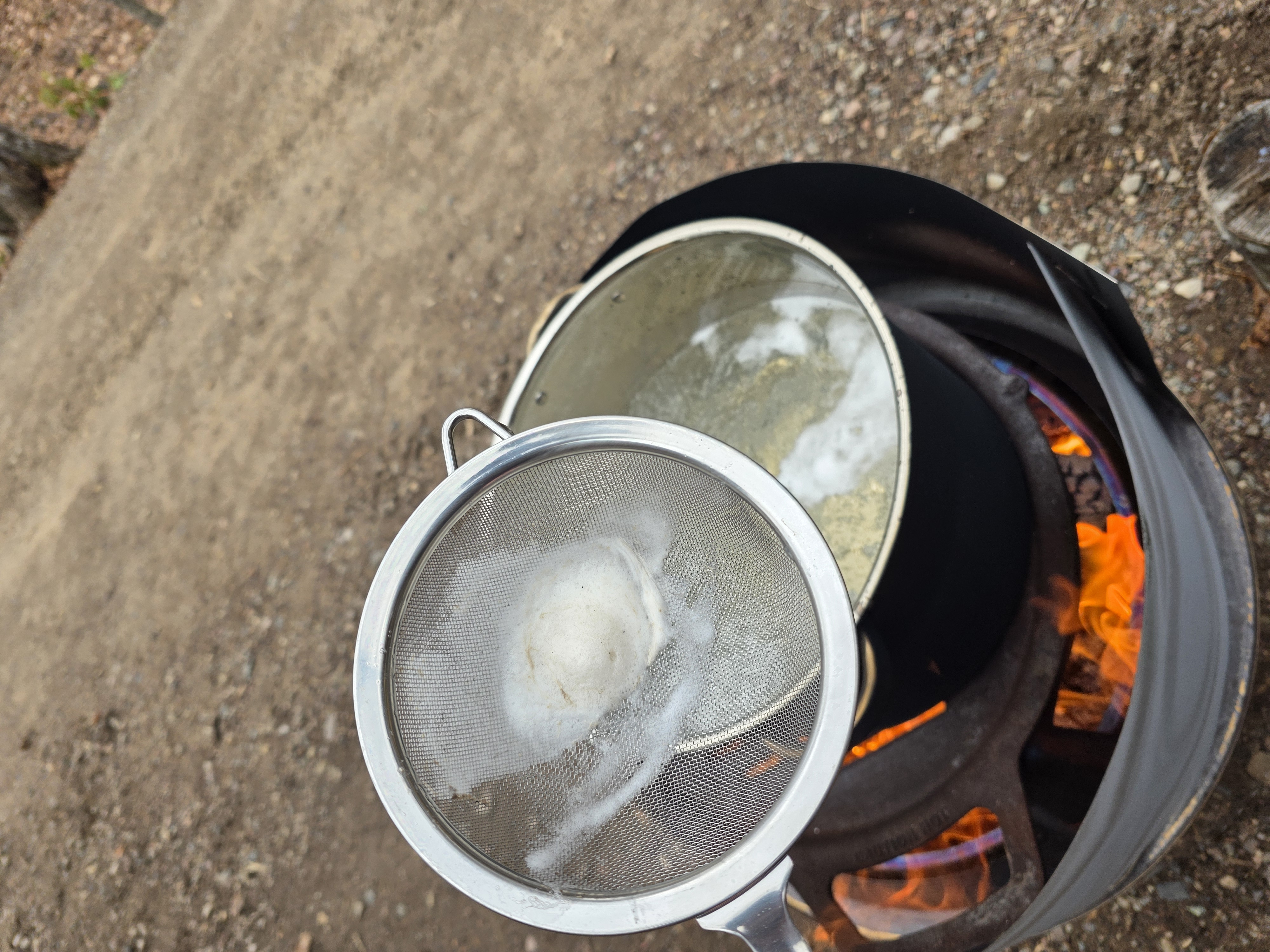
This was the rough work: flame, boil, steam, skimming, fuel management, vessel depth, and attention to scorch risk. The wood engine carried the first major reduction, then was allowed to burn down once the liquid reached the transfer threshold.
The 3-Inch Threshold
The transfer point came when the liquid depth reached roughly three inches in the twenty-one-quart vessel. At that depth, the large water-removal job was mostly finished, and the risk began to change.
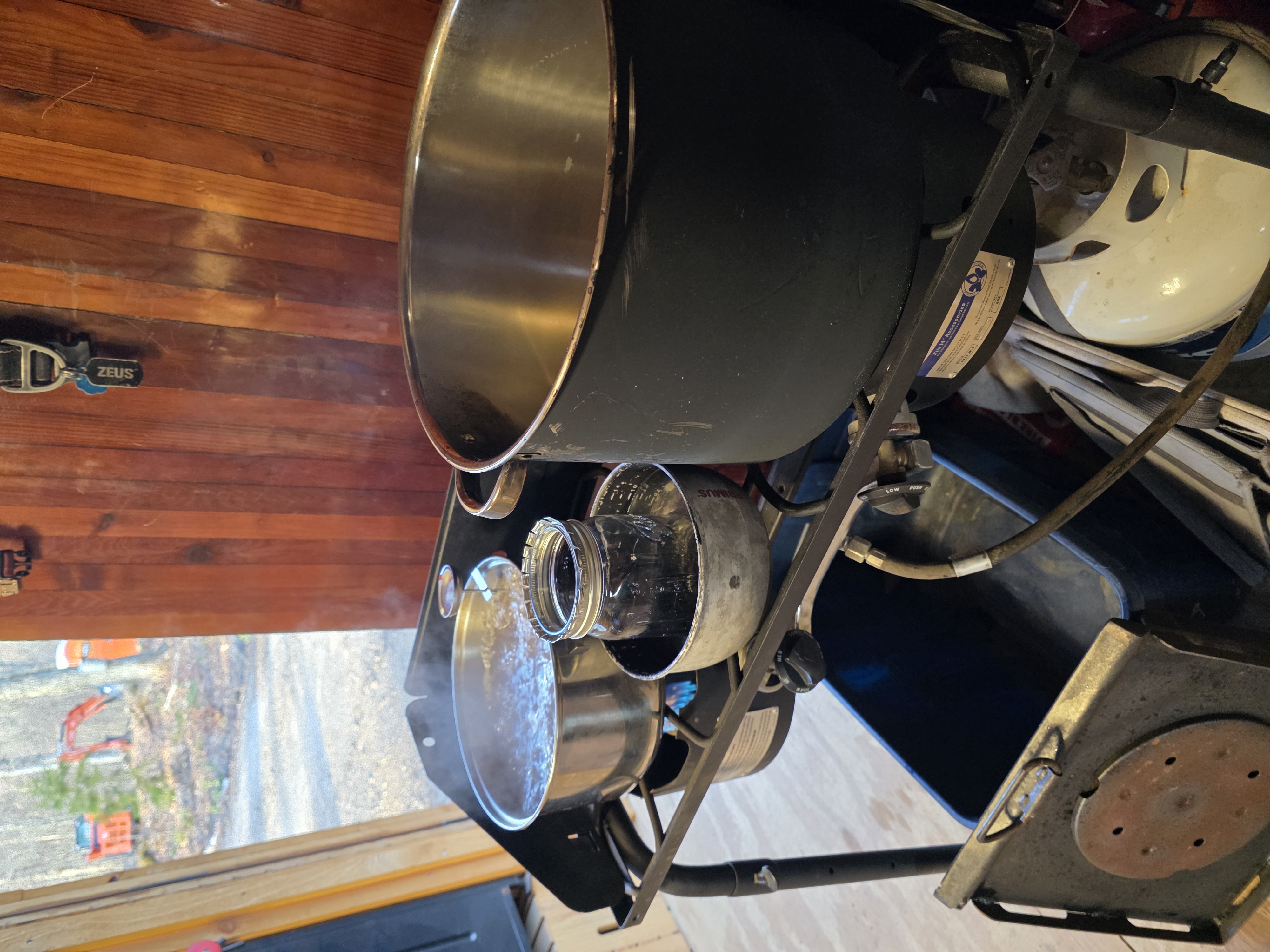
The wood fire could still produce heat, but it could not offer enough control. The aggregate was transferred to propane for precision finishing. That was the correct move. The instruments that followed were not equal to the task.
Collaborative Instrumentation Failure
The finishing phase failed for practical reasons. The target volume was too small for the hydrometer jar. The remaining liquid could not provide the depth needed for a clean density audit. The density test was effectively void.
The thermometer was also too coarse for the speed of the final surge. The analog scale did not resolve the narrow finishing window clearly enough. The liquid syrup phase passed quickly. Thermal runaway followed.
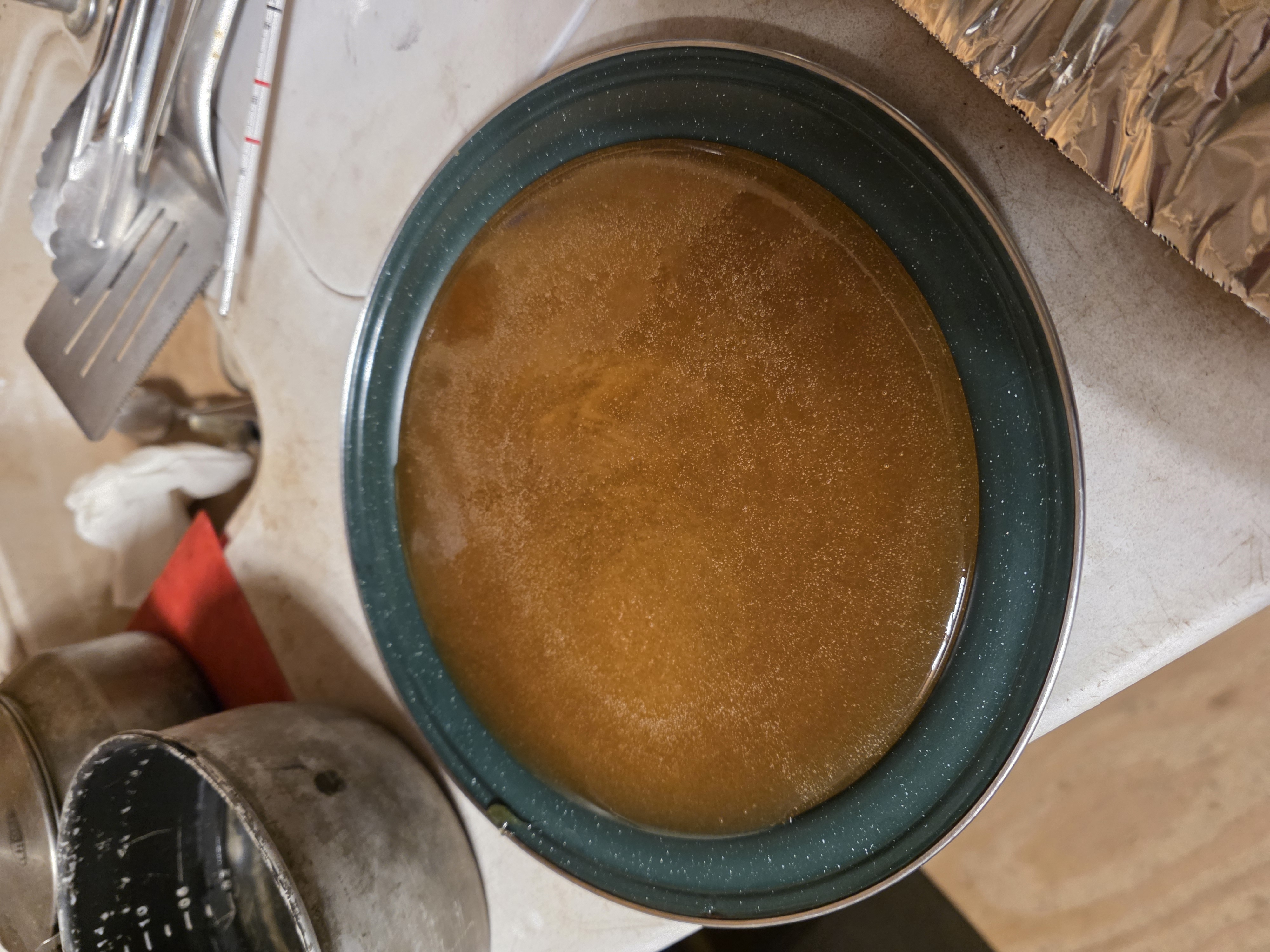
The result was not syrup. It was maple caramel moving toward hard sugar.
The Sandy Asset
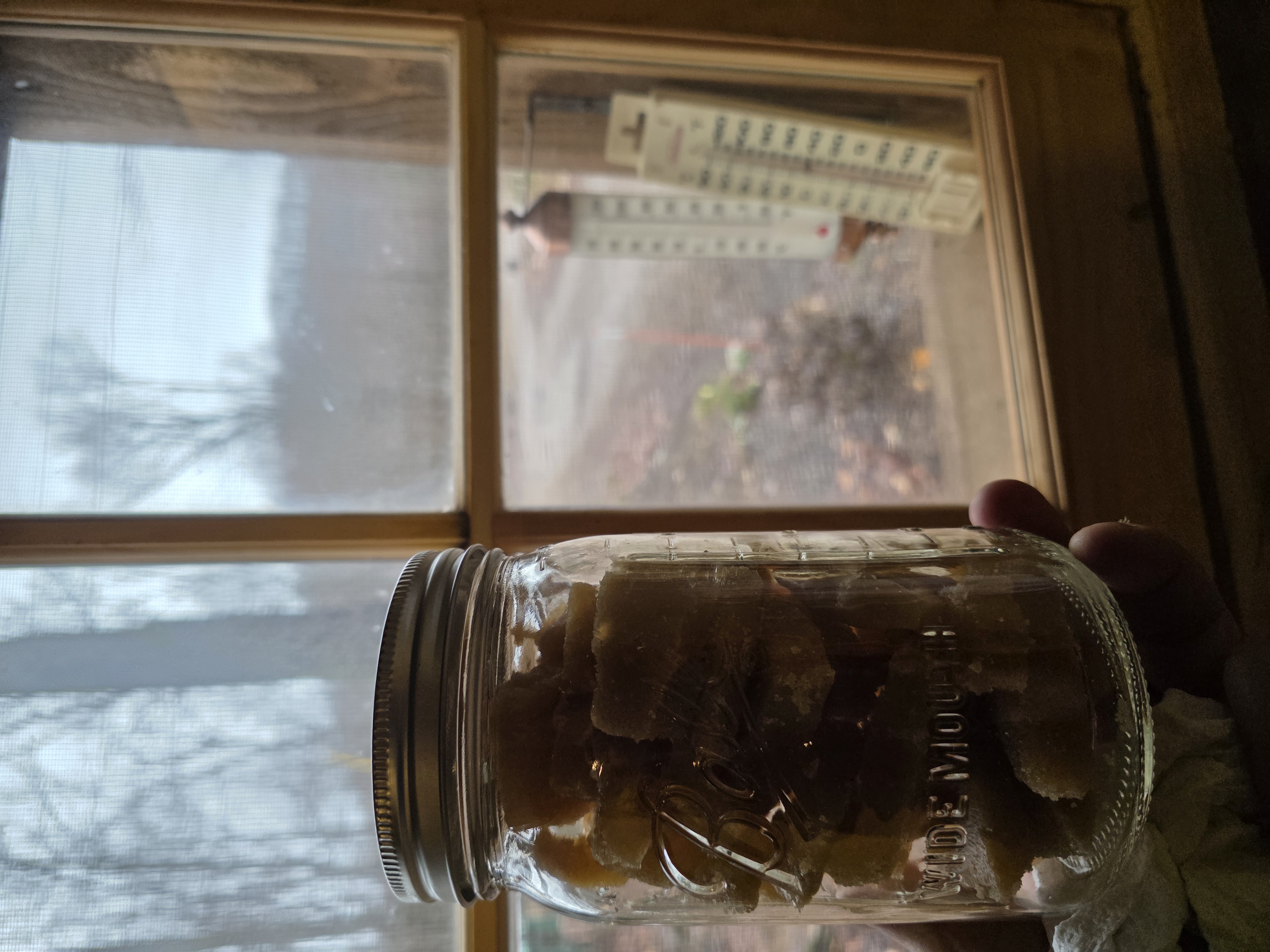
The final state was Sandy Maple: hard, dense, stable, and no longer pourable. It was not the intended product, but it was not a total loss. The asset became a metered sugar store, broken into small portions and rehydrated in hot fluid streams such as morning coffee.
In Ledger terms, the failed syrup became a usable receipt. The prototype identified the weak points: finish volume, hydrometer depth, thermometer fidelity, and the need for a better final-stage protocol.
Species / Material Inventory
- Acer saccharum: Present — extracted aggregate and fuel source
- Fagus grandifolia: Present — hardwood fuel
- Birch fuel component: Present — minor fuel inventory
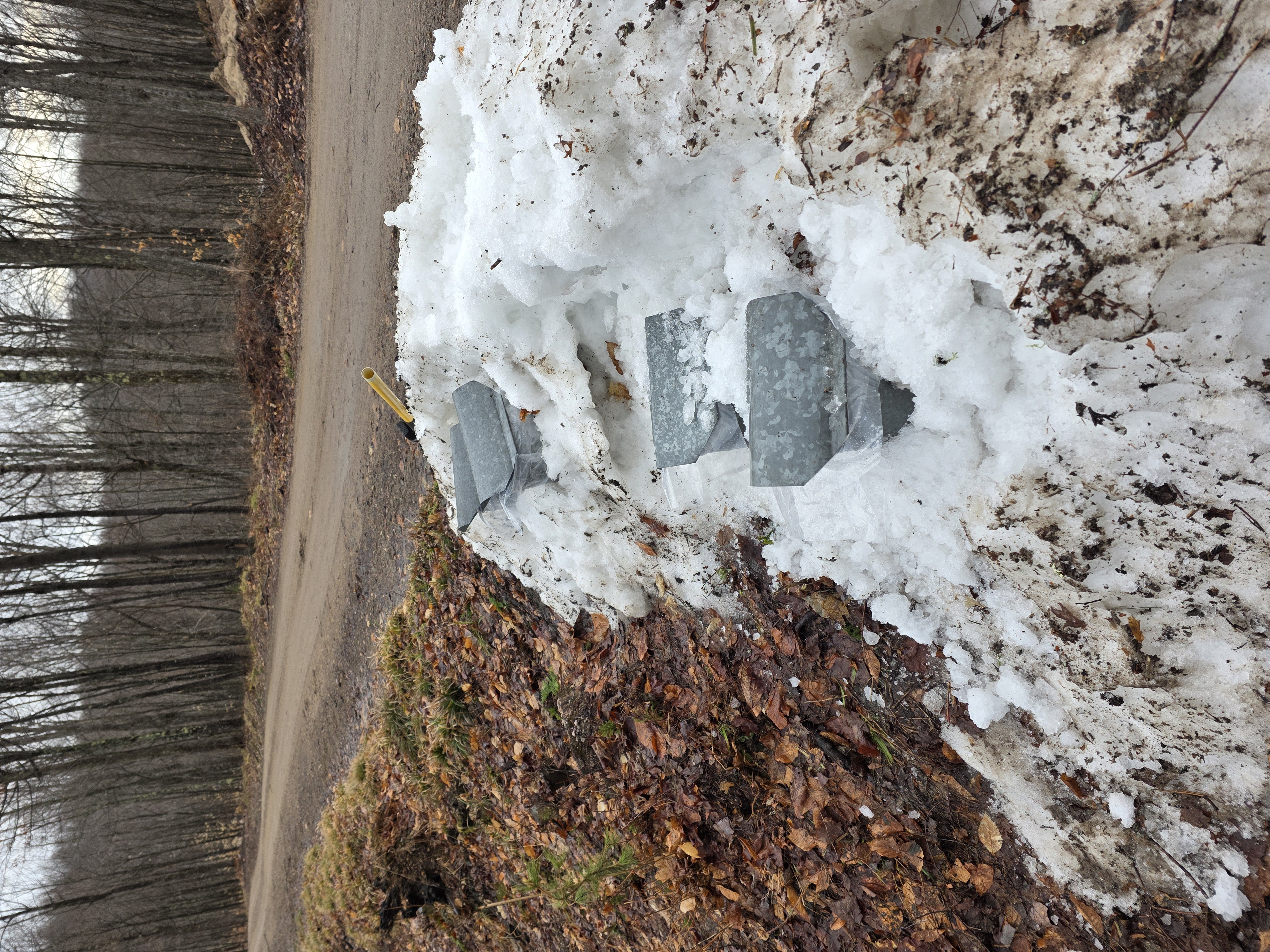
- Snow storage: Present — passive cooling bunker
- Wood engine: Present — bulk reduction phase
- Propane engine: Present — finishing phase
- Instrumentation failure: Confirmed
Prototype Result
The 2026 run did not produce the intended syrup. It produced a better operating record. The system proved that sap could be collected, stored, reduced, transferred, and preserved, but it also proved that finishing cannot be improvised with inadequate measuring instruments.
The next run requires a larger finishing reserve, a more readable thermometer, a hydrometer jar suited to the actual batch volume, and a tighter decision point before the final surge.
The syrup failed. The prototype succeeded.