
The Friction Ledger
There is a difference between walking a forest and assessing a stand. One is a leisure activity. The other is a calculation of tonnage. I do not look at northern woods with innocent eyes, because my hands still remember the weight of the wood.
The Green Chain
My education started with books: dendrology classes in Pennsylvania, forest measurements, and the formal language of trees. But paper does not teach the weight of harvest. That lesson started in Mississippi, on a Weyerhaeuser J-Bar.
The J-Bar was a sixty-foot gauntlet of pine. I was the sole attendant, pacing the length with a pickeroon in hand, sorting lumber that ranged from standard 2x6s to twenty-foot beams. The machine did not care about the operator. It just kept feeding the bins.
It was not only labor. It was erosion. I lost weight. I changed sweat-soaked shirts at lunch. By the end of the shift, the friction of the work left my skin raw.
The Tilt
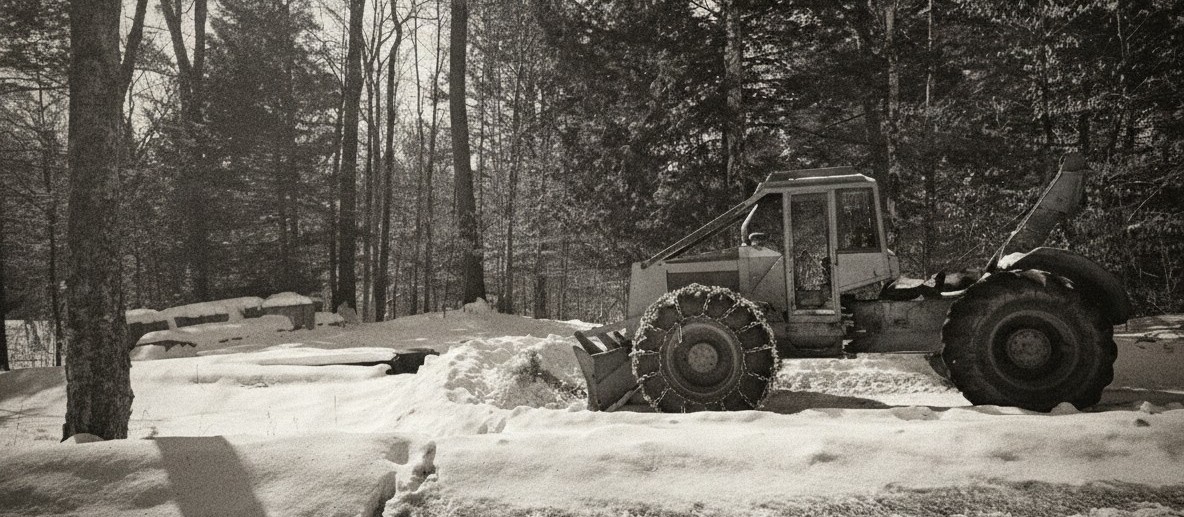
When I moved from the mill to the woods, I traded the pickeroon for a winch. Driving a skidder changes the eye. You stop seeing a forest floor and start seeing traction, grade, angle, cable, anchor, and escape.
I remember the power of dragging three limbed trees, the diesel bogging down as the cable snapped tight. It felt like control until the day the slope took over.
I got the machine too horizontal. Gravity cancelled out the hydraulics. I froze. The machine did not roll, but the physics were already written into my nervous system. I had to be helped out of the cab.
In that frozen second, the power of machinery evaporated. I was only a soft biological part inside a cage of iron. That was the moment the Audit truly began: when I understood that the machine does not own the land. The land owns the machine.
The Plastic Sled
Decades later, at The Place, I was back to moving tonnage, but the mechanics had changed. To clear the Realtor's Debt — the slash left behind by the scenic cut — we hauled abandoned logs up the bank.
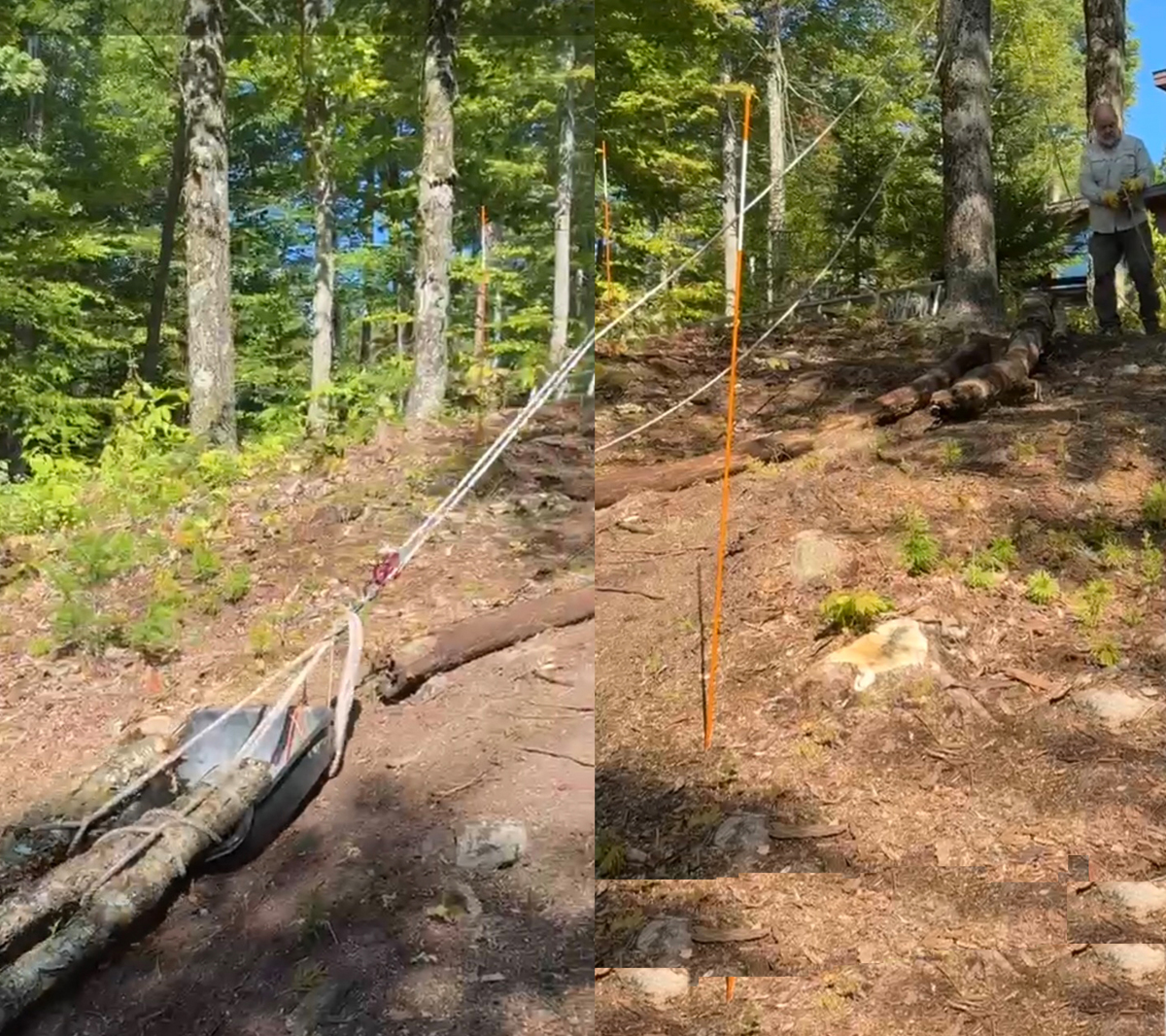
We did not have a skidder. We rigged a block and tackle to a stout maple on the high ground, using the tree as the anchor to redirect the pull of the Polaris side-by-side. The mechanics were sound, but friction was the enemy. The blunt ends of the logs wanted to plow the earth.
Reducing Resistance
I improvised a nose cone using a small plastic cement-mixing tub, lashed under the stump end of the log. It was a ten-dollar sled fighting a ton of resistance, sliding timber over the till rather than through it.
That is the kind of field engineering the Ledger respects: not elegant, not permanent, but true enough to change the load path. Friction remained, but it could be negotiated.
The Snubbing Rope
Despite the mechanical advantage of the block and the plastic sled, the human cost remained. I still had to scramble up and down the slope to set chokers, guide the load, clear hang-ups, and keep the pull honest.
I liquidated twenty-five pounds of my own mass into that hill.
My great-grandfather, Fred LeBoeuf, used to pour water on his snubbing ropes to keep them from smoking when he lowered heavy sleds down Adirondack ice.
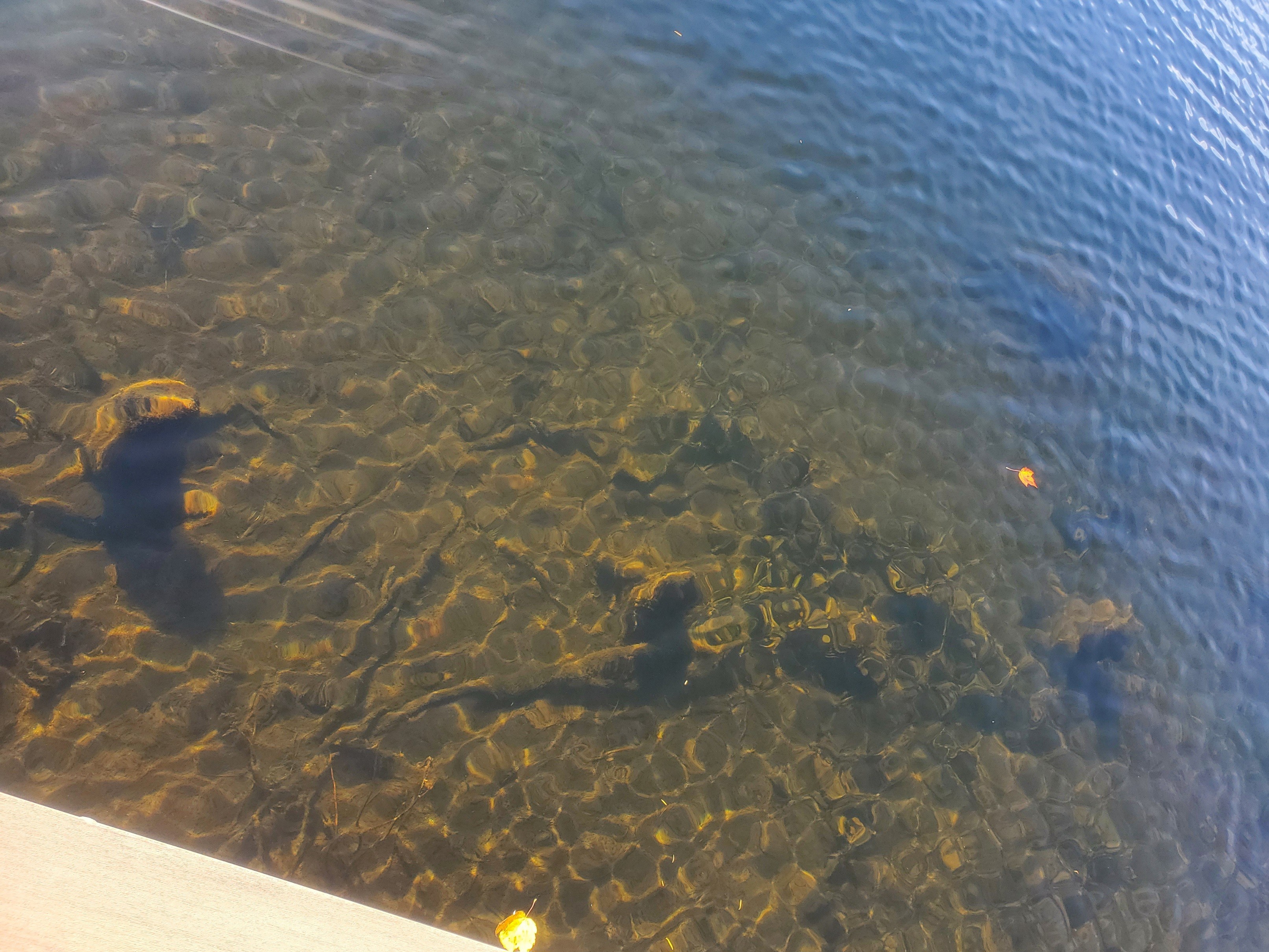
I had a similar mechanism. At the end of the shift, covered in the till of the bank, I walked to the end of the dock and dropped the architecture into the pond. The shock of the cold water was the only thing that stopped the smoking. It was a daily quench: a thermal reset for the machine.
System Condition
- Green chain labor: Recorded
- J-Bar friction: Remembered
- Skidder tilt: Instructive
- Realtor's Debt: Present
- Plastic sled: Field-engineered
- Snubbing rope inheritance: Active
- Daily quench: Required
- Body debt: Collected
The Cost of Gravity
Even a radiator cannot fix a worn bearing. The friction of the J-Bar, the skidder, the bank, the rope, and the slope eventually collected its debt. I have since shored up the frame, a necessary mechanical retrofit for a biological part that finally frayed.
It is another entry in the Ledger: the cost of doing business with gravity.
The land does not care how strong the machine feels. The load path writes the truth.