A LIFETIME OF FISHING, OVER A QUARTER CENTURY WITH A LAKE CLEAR WOBBLER IN TOW
A lifetime of fishing experience brought to one evening on the Upper Pond
Date / Moment: August 11, 2026 — evening
Location: Upper Pond, Twin Ponds Preserve
Type: Field Note / Reflection
Fishing goes back about as far as I can remember.
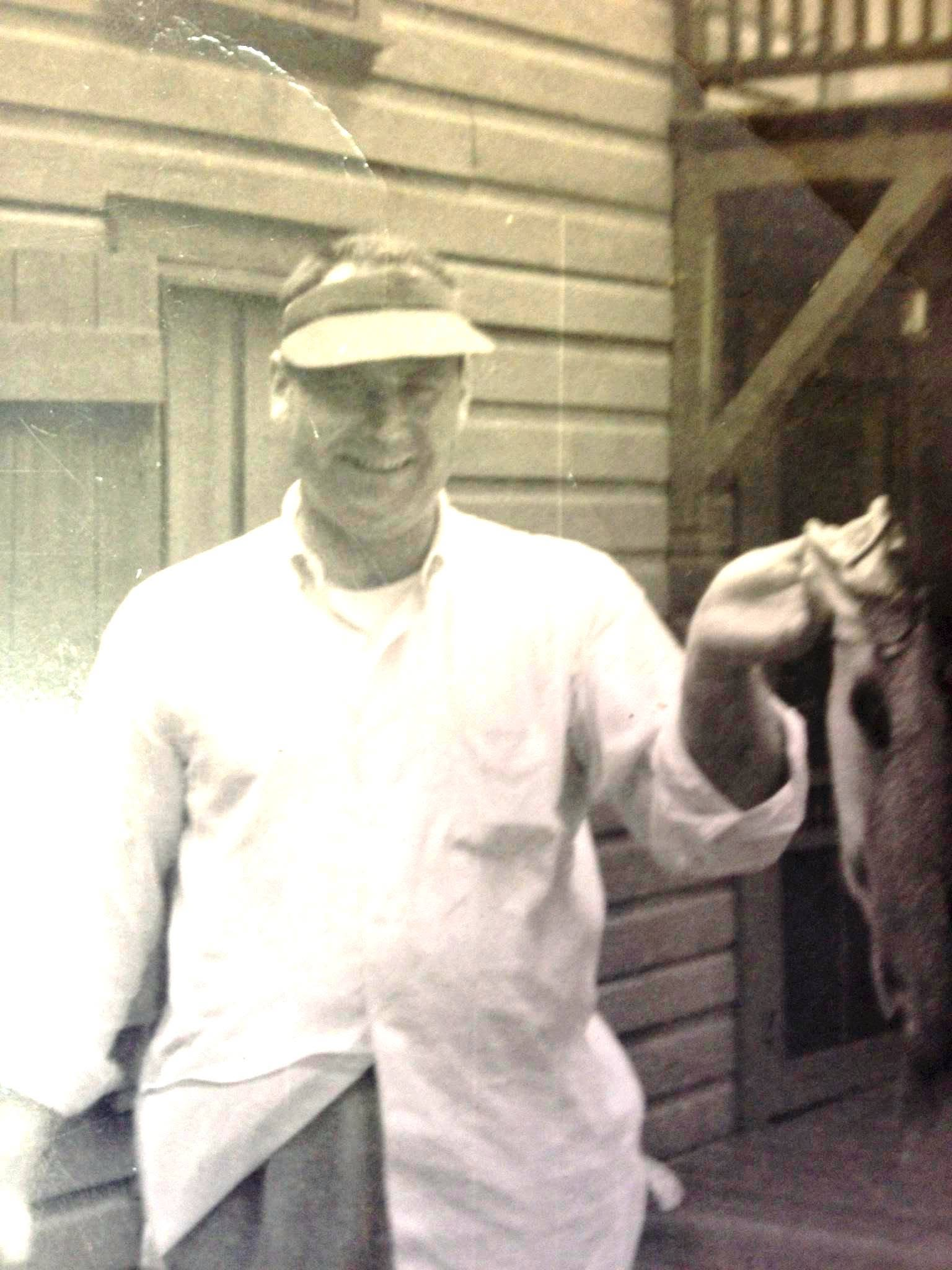
I grew up at Lake Nebo, where my father spent a couple of decades fishing lake trout and became very good at it. The place had come into the family through my mother’s father when I was young. Fishing was simply part of being there.
Years later, a newspaper photograph showed two of my children standing beside a 10-pound, 31-inch lake trout I caught there.
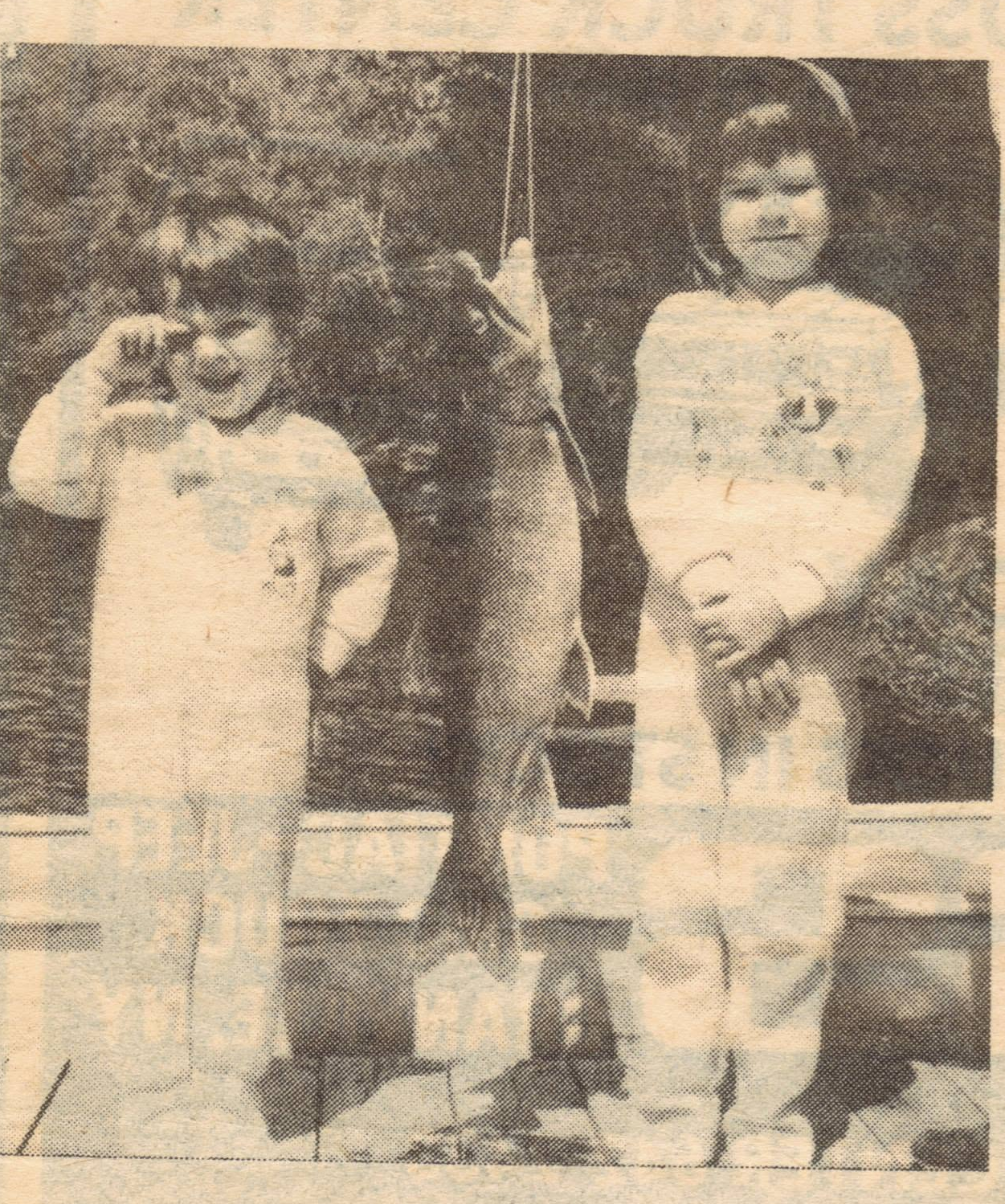
Another old photograph shows me holding a smallmouth at Lake Nebo. That was not the first smallmouth I ever caught. The one I remember best came when I was probably around twelve, fishing at dusk from a boat near a boathouse across the lake. I tried to put a surface lure, perhaps a Jitterbug, tight to the dock and hit the lower edge of the boathouse roof instead. The lure bounced off and landed about where I had wanted it.
A fish hit almost immediately.
I brought it home because I did not know what it was. I knew largemouth bass. This was different. It was a smallmouth bass, and I still remember it because its appearance seemed to mark something changing in the lake.
There were perch too. We made what we called poor man’s shrimp from them—thick pieces of perch fillet briefly boiled until they curled, then eaten with Heinz chili sauce and horseradish.
Fishing was there with my father, with me as a boy, and later with my own children.
But I never lived only to fish. Fishing has usually been part of where I go rather than the sole reason I go there.
Over the years I have fished for striped bass, walleye, northern pike, lake trout and whatever else happened to be in the water where I was.
Brook trout became more prominent as I spent more time in remote Adirondack ponds. I was already doing that kind of fishing before I met Patrick Sisti in 2002, so it has now been part of my life for more than a quarter century.
When I went into those ponds, including trips I later recorded on video, catching brook trout was certainly part of the objective. But so was getting away, camping and simply being back in the woods.
I would love to catch a four-, five- or six-pound brook trout. I would be lying if I said otherwise. But I do not have some need to get onto the water every good morning and prove I can catch a bigger fish.
What interests me increasingly is figuring out what I am seeing.
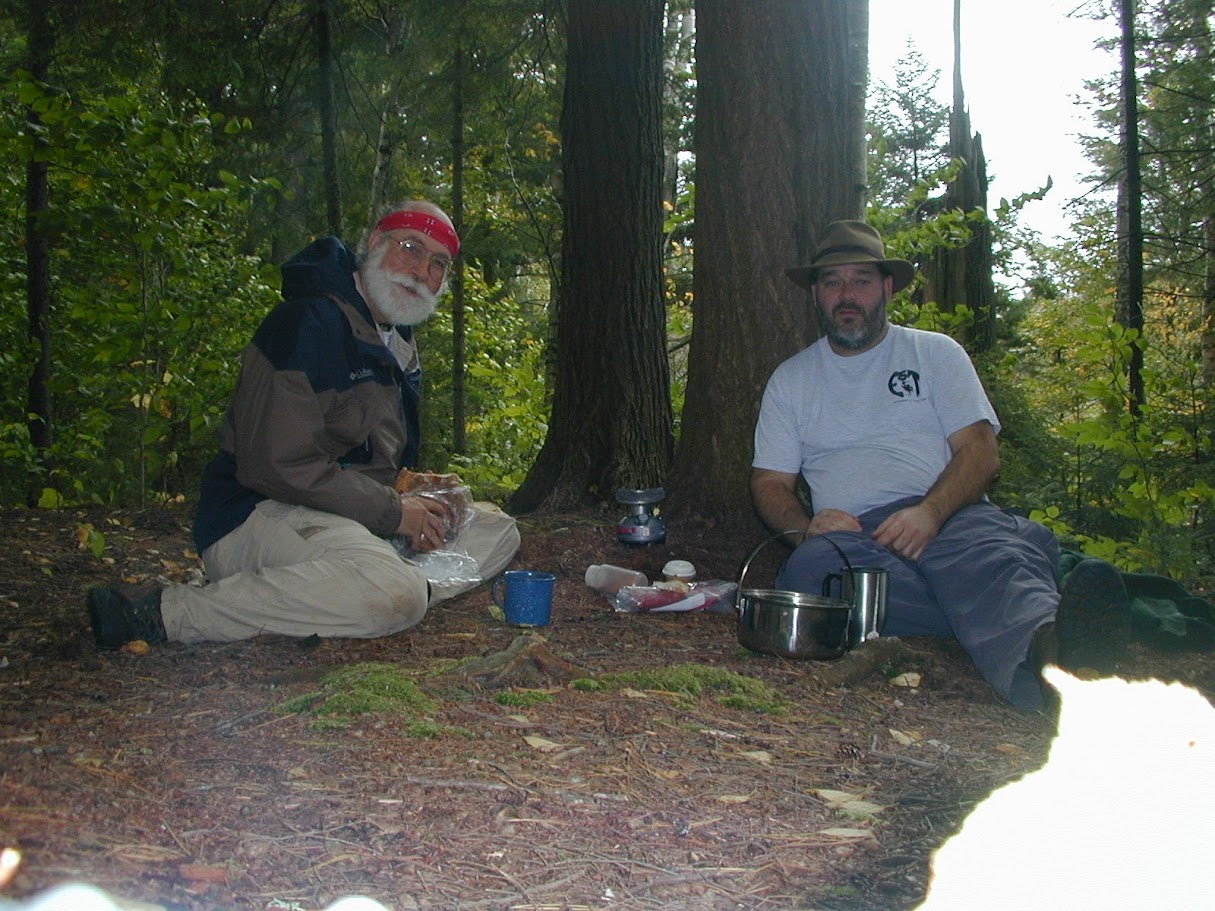
I met Patrick Sisti through my friend Larry in 2002. By then I had already spent years fishing, camping and handling boats and canoes and had been a licensed New York guide. Patrick was a licensed guide too.
We were not teacher and student. We were two experienced outdoorsmen who watched what the other did, talked about what worked, and incorporated things from one another.
Patrick would come to my home with his New York Gazetteer. I had topo maps on CD. We would sit down and plan reconnaissance trips, often winter trips into remote ponds to look them over and decide where we might return the following year to camp and fish.
Patrick also recorded his trips. He kept journals, circulated accounts of fishing trips, and was published.
My friend and colleague Mike Cole kept fishing and field journals as well, eventually having years of them bound into annual volumes. I always admired that he had actually written it down.
Field Scrawl has become my version of that. I can dictate what happened while it is fresh and then assemble it into something I can return to later.
That is why this particular evening became a page.
Earlier this season, the dock had been remarkably productive. I caught what I measured as a twenty-one-inch brook trout there, my personal best at the time, and continued contacting trout from the dock through spring and early summer.
Then the dock stopped reaching them as reliably.
My read was that as the season advanced and the water warmed, the larger trout I had been reaching from shore were moving farther out and deeper.
So I changed the way I fished.
One example of putting that deeper-water idea to work on brook trout came almost by accident on a windy day with Larry.
Normally, when I troll a Lake Clear wobbler, the boat moves forward and the rig trails behind. I watch the rod tip for the regular rhythm of the wobbler.
That day the wind became strong enough that continually fighting it made little sense. I let it carry the boat backward down the pond and concentrated on controlling the speed.
The geometry was reversed, but the Lake Clear was still being pulled through the water. I also allowed the presentation to work deeper.
I began catching trout.
Larry saw what I was doing and changed his presentation. He caught his personal-best brook trout that day. He later told me that if I had not started fishing the way I did in that wind, he would never have caught that fish.
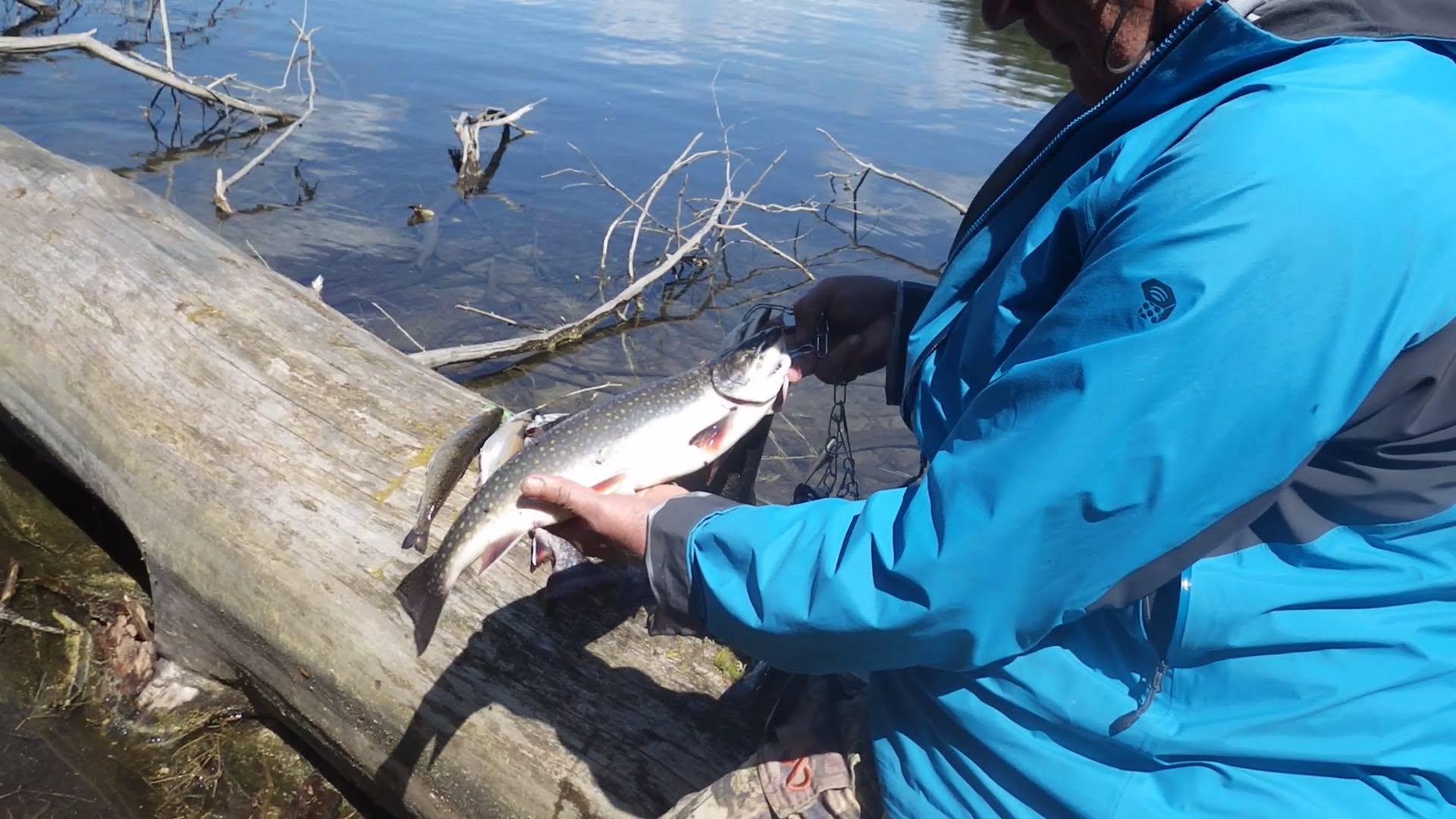
That is a good example of how fishing knowledge has accumulated for me. Experienced fishermen watch each other. Something works, somebody notices, and perhaps it becomes part of what he does later.
There were other reasons deeper water made sense.
The Hungry Trout guides who had worked Twin Ponds were another example of deliberately working different depths while trolling for trout.
Separately, in 2025 a New York State record brook trout—six pounds, three ounces—was caught in the Adirondacks while slow trolling a Lake Clear wobbler.
David from Nature Into Action, someone I know through the outdoor world, brought that article to my attention. In our exchange he said it had gotten him thinking about fishing deeper.
By then I was already moving in that direction myself.
As dock fishing became less reliable this summer, I moved into the canoe, deliberately worked deeper water and continued contacting substantial trout.
Some of those encounters were unmistakable. I have recorded hard strikes with no hesitation at all—fish that hit decisively and were then lost during the retrieve. One broke the line.
Then the weather changed.
For roughly two weeks before August 11 we had been in a wet, unsettled stretch: humidity, repeated rain, wind and very little drying weather. The night before this trip brought a long, heavy thunderstorm, possibly more than one cell, with hard rain and wind.
The weather stick on the barn had been pointing downward farther and longer than I remember seeing it do before.
The pond looked different too.
The change was small, but I could see that the water level was up. The surface almost looked slightly swollen against the shoreline. I had thought about driving a piece of rebar at the edge as a simple water-level gauge, then decided I did not need to turn another observation into another job.
The effects of the rain were visible along the shoreline.
Around the lean-to and elsewhere, the forest-floor litter had been rearranged by runoff. Some patches had been washed nearly bare, while pine needles, leaves and other fine material had been pushed together into darker bands and small accumulations downslope.
The pattern reminded me of sand after wave action on a beach—material stripped from one place and deposited in another.
I had not watched the runoff itself. I was looking at what it had left behind.
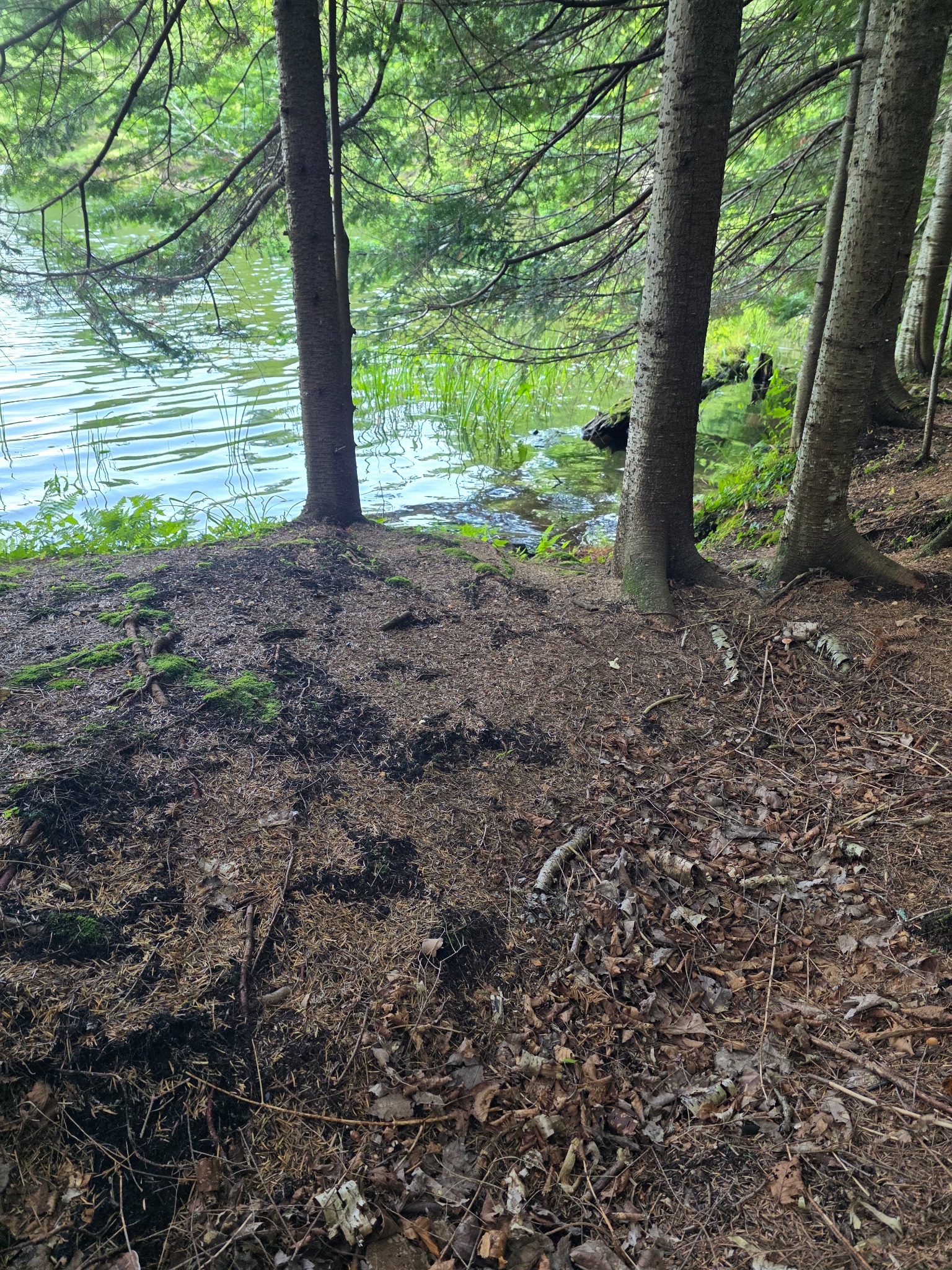
At the same time, the ground was saturated from repeated rain. Twin Ponds does not have one large cold stream pouring into it, so I was also thinking about water being absorbed into the ground, groundwater movement and the upwellings that are part of this system, with Spring Pond the most obvious expression.
With the pond slightly higher and the surrounding ground saturated, the conditions that had led me toward deeper water no longer looked the same.
Before I launched, I was already wondering whether larger trout might have less reason to remain deep and might again be ranging closer to shore.
When I arrived, my neighbor and his brother were already fishing. My neighbor lives a little south of me on the eastern shore. His brother took the western side while my neighbor headed north along the eastern shoreline.
I told him only, “I’m going to fish the middle.”
So I did.
Almost immediately I watched my neighbor hook a fish.
As he continued north, I saw at least two or three more hookups. From where I was sitting, the shoreline fishing looked visibly more active than what I was getting in the middle.
I could not see everything his brother was doing on the opposite shore, but my impression was that the two of them were probably contacting more fish than I was.
That did not give me the idea of moving shallower. It reinforced the one I had already brought to the water.
It also brought back an old, simple fishing idea. As a kid I had seen films of ocean shorelines where disturbance moved food, smaller fish responded, and larger predators followed.
I was not trying to turn an Adirondack pond into the Atlantic Ocean. The thought was simply that disturbance can change where feeding activity occurs.
There are other fish in Twin Ponds besides brook trout. I did not need to decide precisely what was feeding on what. I was interested in whether the wet, disturbed shoreline zone had become more active and whether larger brook trout might be ranging into it.
I began moving out of the center toward that general shoreline band, while still remaining well offshore and giving both fishermen plenty of room.
Over the evening I made at least four circuits.
I had six brook-trout hookups.
I netted three and lost three during the retrieve.
All three fish I lost felt substantial.
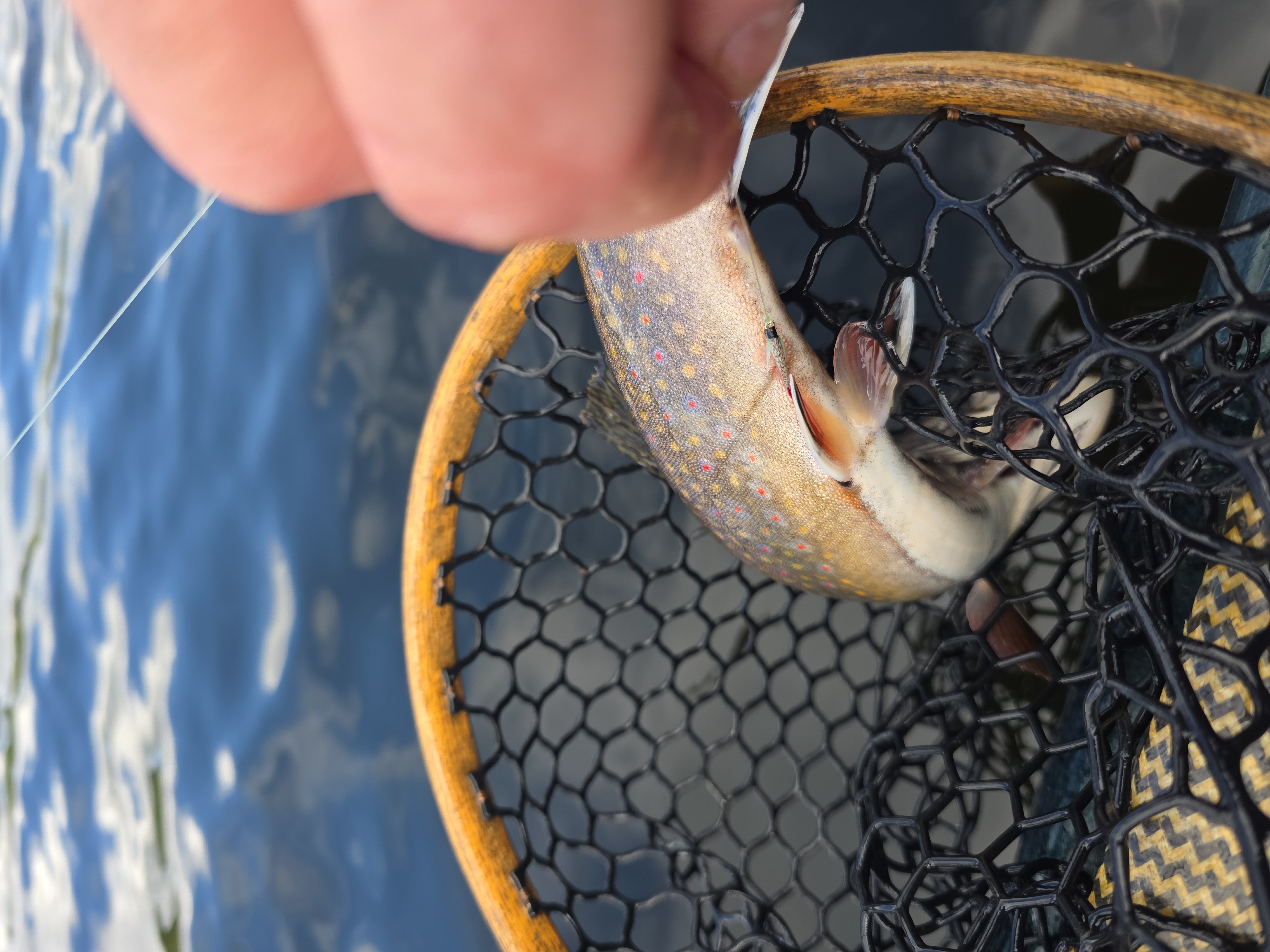
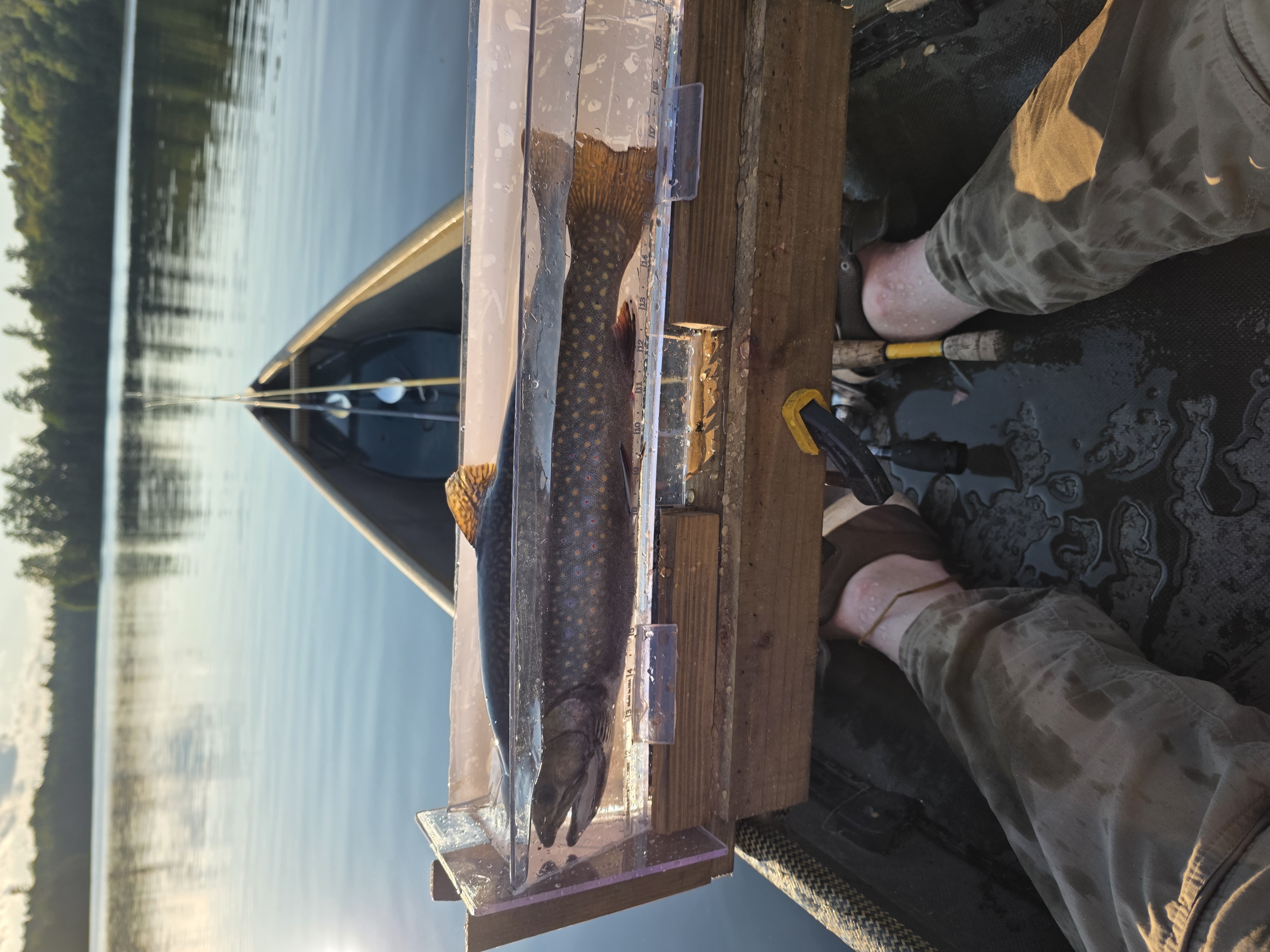
The first fish I netted was about sixteen and a half inches. As far as I can remember, it is the largest brook trout I have been able to net and photograph here using this tiny barbless trailing fly.
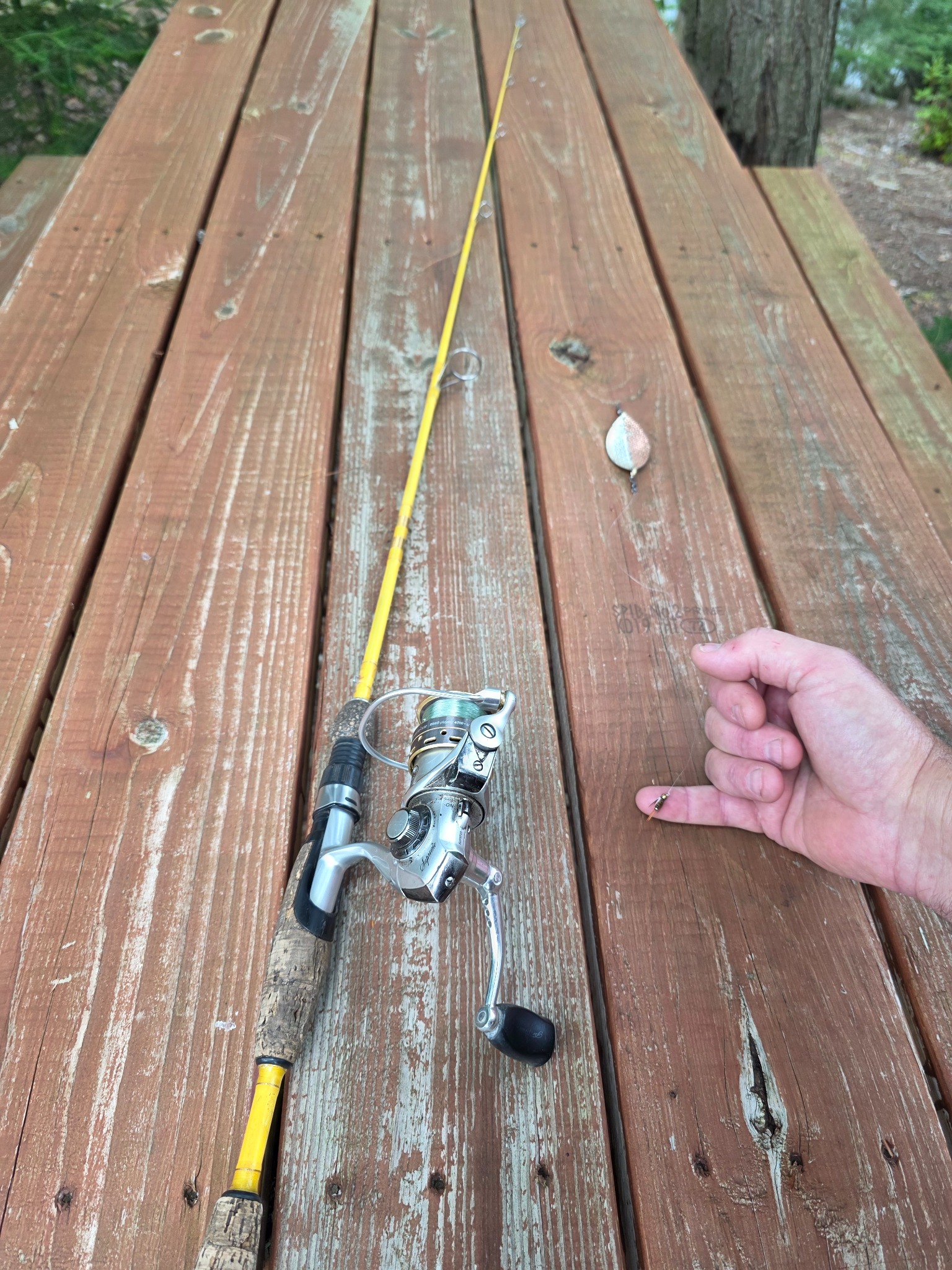
The fly really is tiny. I do not know its numbered hook size. It is small enough to sit easily against the end of my little finger.
The size of that fly still fascinates me, although I understand why the rig works. The Lake Clear wobbler is a flasher. Its movement and reflected light can attract a trout’s attention from some distance, and the tiny fly follows behind it as the thing to take.
What still gets me is that substantial brook trout will close on that presentation and take something so small.
I did not always fish it that way.
The old Adirondack method behind a Lake Clear often used what we called Adirondack bacon—a whole earthworm trailing behind the wobbler.
Brook trout could take that worm ravenously and inhale it. A bait hook, especially one with keeper spurs or barbs along the shaft, could end up deep in the fish. When trout were being kept for the table, that was simply part of the method.
There was also a cultural divide around it. Some fly fishermen looked down on the Lake Clear-and-worm fisherman as something less than a proper trout angler.
I was never much interested in that argument.
Twin Ponds is catch and release. Live bait is prohibited. Artificial lures are required, with barbless hooks or the barb crimped.
So behind my Lake Clear now is this tiny barbless fly.
The way I fish it is important.
While trolling, the rod sits in a holder and I watch the tip.
The Lake Clear wobbler produces a regular rhythm there.
What I have been calling a bump is not really a bump in the ordinary sense. It is a slight backward interruption in that rhythm.
A hard strike is entirely different. When a brook trout takes aggressively, the rod tip goes back and there is no question what happened.
This is much smaller.
My read is that the trout is nipping or catching the trailing end of the fly, possibly even the feathers extending behind the bend of the hook. That contact momentarily checks the fly and shows up as the slight backward movement I see at the rod tip.
I think the fish may be trying to slow or stop the prey before coming back to take it more completely.
When I see that movement, I take the rod from the holder and move the rod tip backward toward the stern while the boat continues forward.
That deliberately slows or nearly stalls the fly.
The purpose is not to foul-hook the trout. I am trying to give it something resembling prey that has just been struck, stunned or slowed and is now easier to take.
When the rod is about as far aft as I can comfortably bring it, I set the hook.
That evening I saw three different results from that interaction.
One trout was hooked conventionally in the upper inner lip.
The sixteen-and-a-half-inch trout was foul-hooked from underneath at the very front of the lower jaw, barely through the tissue.
The third was foul-hooked in the side.
Some fishermen would say the foul-hooked fish do not count—that they were flukes because the trout did not properly take the fly.
I look at it differently.
I do not believe my leader simply happens to pass over some uninvolved trout and snag it. The fish has already interacted with the fly. I saw the indication at the rod tip before I ever picked up the rod.
During the stall, the trout may turn, release the trailing end or reposition itself. The slowed fly and leader can then end up beneath it, beside it or across it before I make the hook set.
Sometimes that gives me the clean mouth hookup.
Sometimes it does not.
That is the distinction I make between a fish simply taking the fly and going fishing and catching the fish. The trout begins the interaction. What I do with the presentation afterward can determine how the final hookup occurs.
I had noticed and recorded foul-hooked trout before.
Then I looked at that third fish in the net.
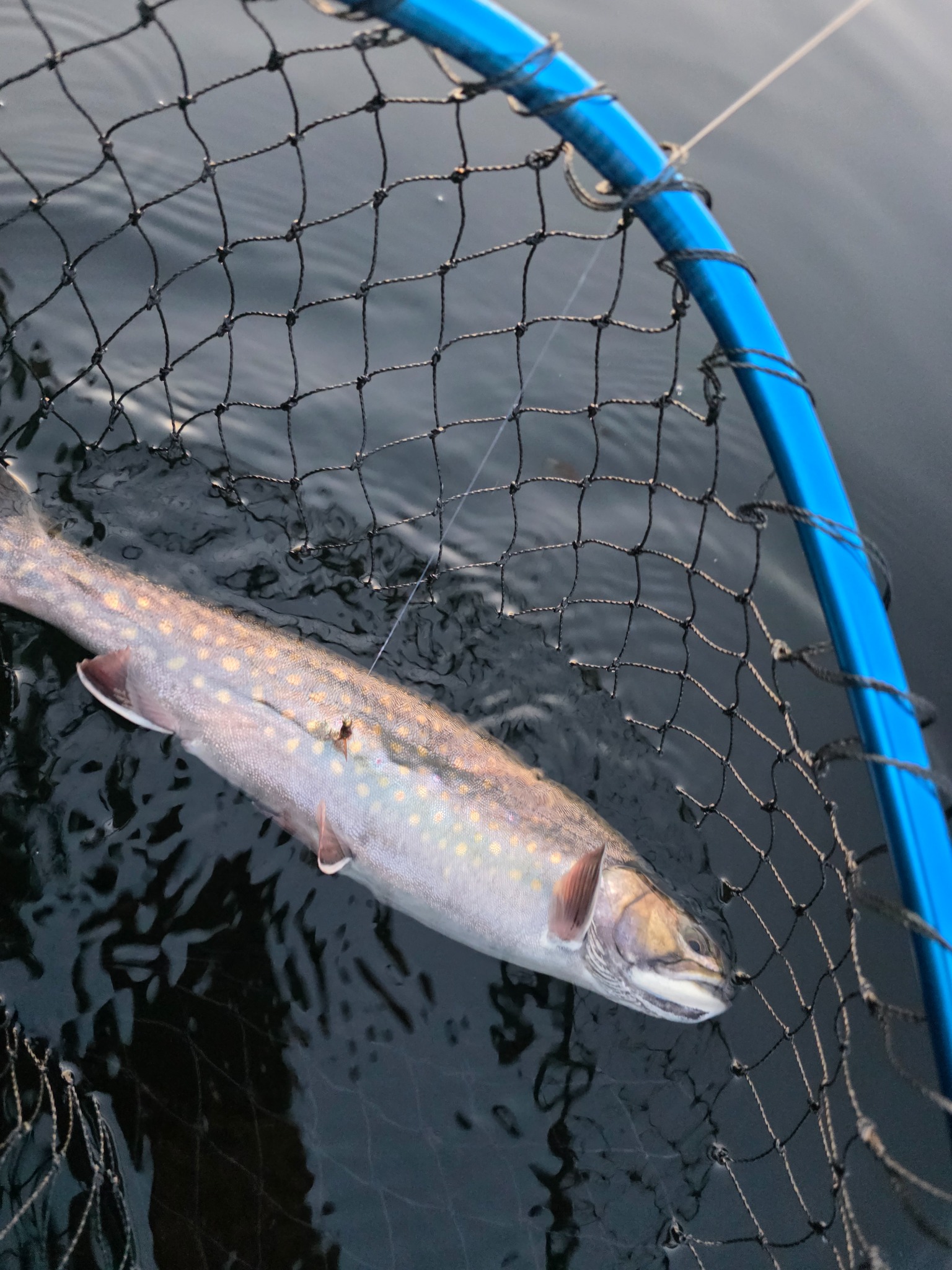
The hook was very close to the lateral line and very close to the vertical midpoint from back to belly.
Almost dead center on the side.
A bullseye.
That was the final done for me.
It was not one random foul-hook standing by itself. It landed on top of years of seeing the same kind of interaction and wondering what was happening during the stall.
For my own fishing record, the bullseye settled it.
The fish was interacting with the fly first. The stall sometimes resulted in a conventional hookup and sometimes did not.
I will keep fishing this way because it catches fish and I enjoy it.
Eventually I expect to spend more time with my fly rods when I have a boat that accommodates me more comfortably—perhaps the Peeler skiff next year. That will be another way of fishing, not a replacement forced on me by this observation.
The bullseye did not tell me I had been fishing wrong.
It told me what I had been watching.
After a lifetime of fishing, and more than a quarter century with a Lake Clear wobbler in tow, that was enough reason to write the evening down.
THE LINE MARK